10 reasons why women should lift weights
By Martin Ebner
Updated October 2026
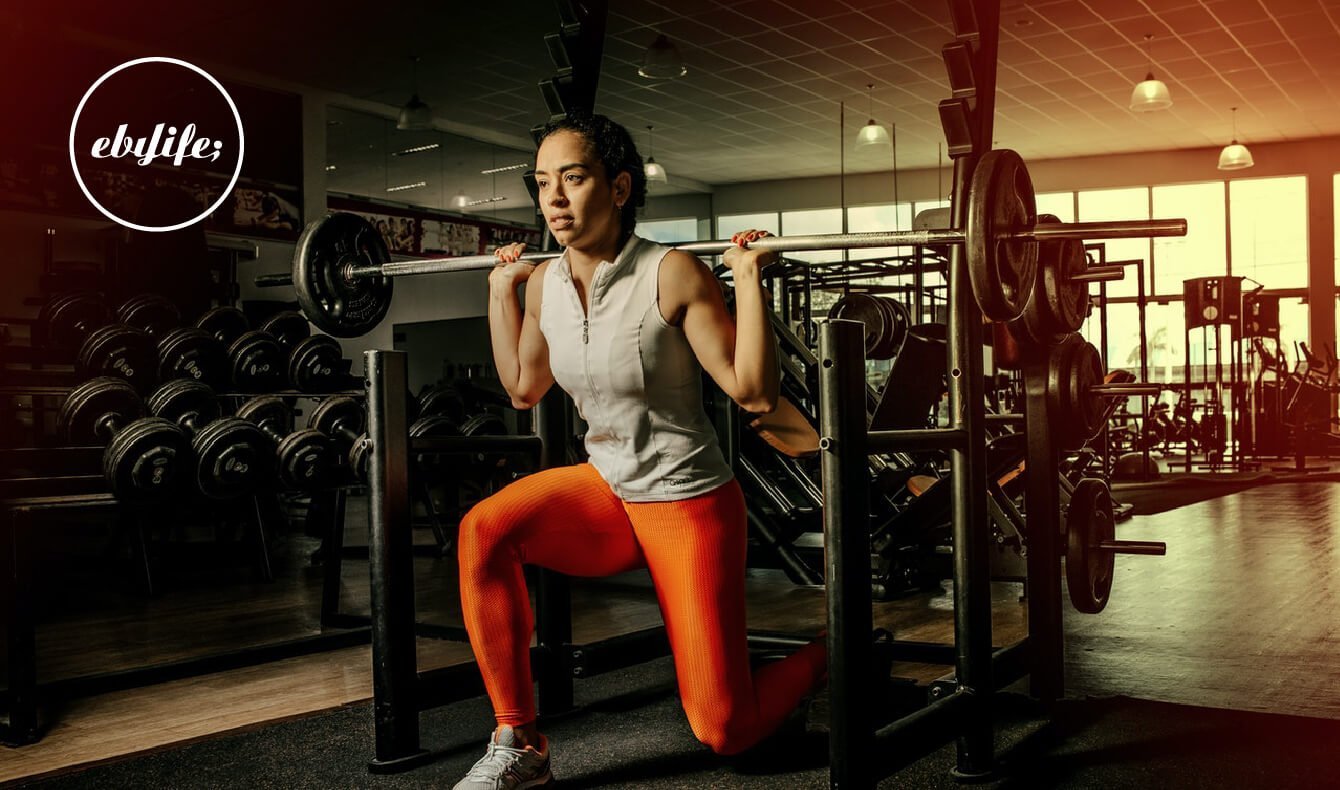
I love training women. Many of the women who come to me now have strength goals that used to be treated as exclusively male. They want their first pull-up, a stronger bench press, a proper deadlift or a squat they’re proud of. I absolutely love that shift.
There’s nothing wrong with wanting to lose fat or change how your body looks, but women’s training should never have been reduced to getting smaller. Lifting weights can change your physique, but it can also make you stronger, improve your health and give you something far more satisfying to chase than a number on the scales.
Here are ten properly good reasons to start.
1. YOU’LL GET STRONGER
Let’s begin with the obvious one. Lifting weights makes you stronger, and being stronger makes an enormous number of ordinary things easier. Carrying shopping, lifting luggage, moving furniture and hauling yourself up from the floor all require strength.
Then there are the goals you choose for yourself. Your first full push-up, an unassisted pull-up or adding another five kilos to the bar can be incredibly satisfying. Strength gives your training a purpose beyond simply trying to burn calories.
A recent systematic review covering women across adulthood found that resistance training produced substantial improvements in strength in both premenopausal and postmenopausal women. You’re never too young to build it, and you’re certainly not too old to begin.
2. YOU WON’T GET BULKY BY ACCIDENT
This concern hasn’t disappeared, but it’s becoming much less common. Building a noticeably muscular physique takes time, decent training, enough food and a lot of consistency. It doesn’t happen because you picked up a heavy dumbbell twice.
You’re also in control of your training. If your shoulders, legs or glutes eventually develop more than you want, you can reduce the amount of direct work they receive. Muscle develops gradually, which gives you plenty of time to decide whether you like the direction you’re heading.
My guide to muscle building versus toning explains this properly. Toning isn’t a separate type of training. It normally means building enough muscle to create shape while having a body-fat level that allows some of that shape to show.
3. IT CAN CHANGE YOUR BODY COMPOSITION
Resistance training can help you build or preserve muscle while reducing body fat, particularly when it’s combined with an appropriate diet. That can change how your body looks and how your clothes fit, even when the number on the scales doesn’t move dramatically.
Muscle doesn’t weigh more than fat. A kilogram is still a kilogram. Muscle is denser, which means the same weight takes up less space. That’s why somebody can look noticeably leaner without experiencing an enormous change in bodyweight.
The same recent review of resistance training in women found increases in functional mass alongside reductions in fat mass. Lifting isn’t magic, and it doesn’t replace your diet, but it’s one of the most useful tools available for improving body composition.
4. IT HELPS YOU BUILD STRONGER BONES
Your bones respond to loading too. Resistance training places controlled stress through the skeleton, giving it a reason to maintain or improve its strength.
This becomes increasingly important as women get older, particularly after menopause, when declining bone density can increase the risk of osteoporosis and fractures. A systematic review of postmenopausal women found that resistance training improved bone mineral density at several important sites, including the lumbar spine, femoral neck and hip.
That doesn’t mean every squat instantly strengthens your bones. It’s the result of sensible training repeated over time, which is how most useful things in fitness work.
5. IT HELPS YOU KEEP YOUR INDEPENDENCE AS YOU AGE
We naturally tend to lose muscle and strength as we get older, particularly if we give the body no reason to keep them. That can eventually affect balance, mobility and the ability to manage normal daily life without help.
Strength training gives you a way to push back against that decline. It helps preserve the muscle and physical capacity you’ll want later, while also making you more capable now.
Getting older is inevitable. Becoming unnecessarily weak isn’t. I’d rather build strength before I desperately need it than wait until getting out of a chair has become the workout.
6. IT CAN IMPROVE ATHLETIC PERFORMANCE
Strength supports speed, power and the ability to produce force. Whether you run, cycle, play tennis, hike, climb or compete in a team sport, getting stronger can improve the physical qualities your activity depends on.
It doesn’t mean turning every athlete into a powerlifter. The exercises, volume and loading should complement the sport rather than compete with it. A systematic review of female team-sport athletes found that lower-body strength training improved sprint performance.
Even if you’ve no interest in formal competition, feeling more powerful and capable changes how physical activity feels.
7. IT BUILDS CAPACITY AROUND YOUR JOINTS
A well-designed strength program trains far more than the muscles you can see. It also exposes tendons, connective tissue and joints to gradually increasing loads.
That doesn’t make you injury-proof, and bad training can create problems of its own. The goal is to build capacity sensibly, use exercises that suit your body and give things enough time to adapt.
For every exercise that doesn’t feel right, there are usually another five we can use. You don’t need to force your knees, shoulders or back through movements they hate simply because somebody has decided an exercise is compulsory.
8. IT CAN BE GOOD FOR YOUR HEAD
There’s something powerful about doing a difficult thing and realising your body can handle it. Strength training gives you regular proof that you’re becoming more capable.
Research supports benefits beyond the physical ones. A meta-analysis of randomised trials found that resistance training was associated with reductions in depressive symptoms across adults with different health backgrounds.
Training isn’t a replacement for professional mental-health care when that’s needed. It can, however, provide structure, focus and a genuine sense of achievement. On certain days, moving some weight and getting out of your own head for an hour is reason enough to train.
9. PROGRESS IS EASY TO SEE
Appearance changes can be slow and difficult to judge when you see yourself every day. Strength gives you clearer evidence.
Last month you used eight kilos. This month you’re using ten. You needed assistance for a pull-up, and now you don’t. You completed six repetitions before, and today you managed eight with better control.
That progress is earned, measurable and yours. Following progressive overload doesn’t mean adding weight every time you enter the gym. It means gradually improving something while keeping the quality of the work high.
10. TRAINING CAN BECOME SOMETHING YOU ENJOY
Exercise is often sold to women as punishment for eating too much or as a way to make their bodies occupy less space. That’s a miserable basis for a lasting relationship with training.
Lifting gives you skills to learn, goals to chase and movements to improve. Sessions stop being about surviving until the calorie counter reaches a satisfying number. They become an opportunity to practise something and get better at it.
That’s one of the reasons I love training women. Watching somebody move from being nervous around weights to chasing a pull-up or asking when we can increase the load is brilliant. The goal becomes what her body can do, not simply how little of it she can see in the mirror.
PICK UP SOMETHING HEAVY
You don’t need to begin with a loaded barbell, and you don’t need a completely different program because you’re a woman. Machines, dumbbells, cables and bodyweight exercises can all build strength. Start at the level you’re at, learn the movements properly and progress from there.
Two or three well-planned sessions each week can take you a long way. Train the major movement patterns, include some direct work for the areas you care about and track enough of your training to know whether it’s moving forwards.
Women are allowed to want strong backs, powerful legs, visible muscle and impressive numbers on the bar. They always were. It’s just nice that more of them are finally being encouraged to say it.
If you’ve ever been told women should use tiny weights, avoid getting too strong or train differently because the dumbbells are pink, Check It Oot is where I pull apart the fitness advice that deserves it. One email once or twice a month, written by me and delivered straight to your inbox.