CrossFit: 10 things I learnt from training a CrossFitter
Written by Martin Ebner,
Last Updated October 2026
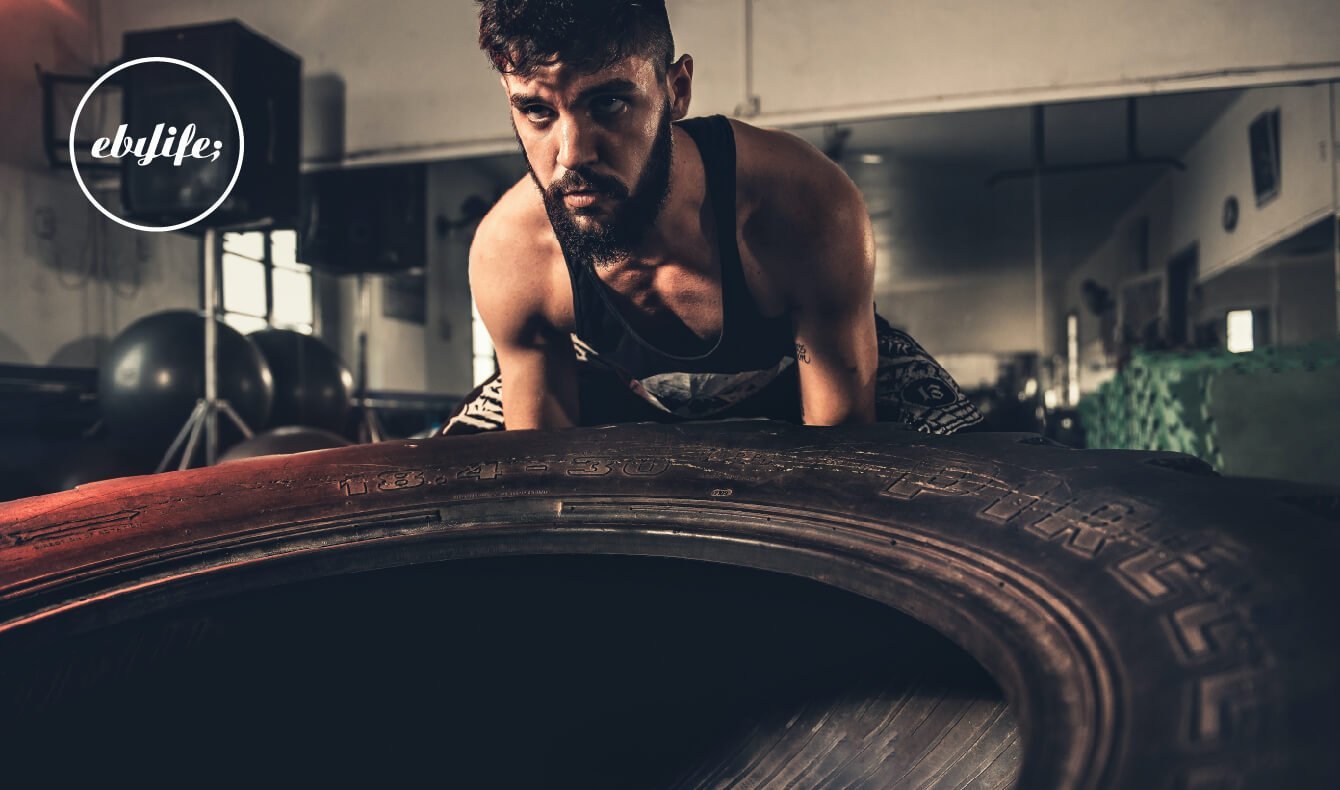
CrossFit isn’t for me, but I think it’s seriously impressive. At the elite end, athletes move between Olympic lifts, gymnastics, running, swimming and whatever fresh horror the organisers have invented. To me, it makes HYROX look like the warm-up.
The CrossFit Games award their champions the title of Fittest on Earth. That doesn’t mean everybody walking into a CrossFit box can make the same claim, but the best CrossFit athletes have a strong case. They aren’t simply strong, fast or fit. They’re ridiculously capable across almost everything.
I’d done some CrossFit before I started training Andrea, but working with a committed CrossFitter gave me a much better look at what the training produces. He arrived with an enormous engine, plenty of ability and a willingness to work. He also had a few habits I wanted to change.
Here are ten things I learnt.
1. THEY’RE COMPETITIVE WITH THEMSELVES
Andrea didn’t need me shouting at him or inventing motivational speeches. Give him a previous time, weight or rep count and he immediately had something to beat.
That competitive streak can be incredibly useful. Training becomes measurable, and progress stops being based on whether the workout felt suitably dramatic. You did more work, lifted more weight, moved better or finished faster.
The important part is knowing when to compete and when to train. Not every session needs to become a personal best attempt, but CrossFitters rarely need convincing to make an effort.
2. THEIR WORK CAPACITY CAN BE RIDICULOUS
Someone who only lifts may be very strong but struggle when the session starts moving. Someone who only runs may have a huge engine but lack strength. CrossFit tries to build both, alongside power, coordination, gymnastics and the ability to keep working while tired.
Andrea wasn’t necessarily the best at every individual exercise. That isn’t the point. He could move between different physical demands without falling apart, and his core strength was excellent.
That broad capability is what makes elite CrossFit athletes so impressive. They may not beat a specialist powerlifter, gymnast or distance runner at their own sport, but ask those specialists to do everything in the same afternoon and the argument becomes far more interesting.
3. THEY ADAPT QUICKLY
We trained in heat, wind and the occasional bit of rain. Andrea never arrived expecting the conditions to be perfect. He treated them as part of the session.
That attitude matters more than people realise. Some people lose their enthusiasm because the gym is busy, the weather has changed or their favourite machine is being used. A good CrossFitter tends to look around, see what’s available and get on with it.
CrossFit is built around preparing for different physical demands. You won’t become brilliant at absolutely everything, but you do become far less dependent on everything going to plan.
4. PEOPLE PULL EACH OTHER THROUGH
CrossFit has built a training culture that most gyms would love to have. People compete, but they also encourage the person finishing last.
That’s not a small detail. Training beside people who know your name, notice your progress and expect you to turn up can make consistency much easier. The workout remains yours, but you don’t feel as though you’re doing it alone.
Traditional gyms can sometimes feel like rooms full of people deliberately avoiding eye contact. CrossFit boxes tend to be the opposite.
5. EFFORT IS NEVER THE PROBLEM
Andrea’s instinct was always to do more, move faster and finish sooner. As a trainer, my job was occasionally to pull him back rather than push him forward.
That’s a lovely problem to have, but it still needs managing. Working harder only helps when the effort is going into something productive. More speed, more weight and more repetitions don’t automatically produce a better result.
CrossFitters usually bring the engine. Good coaching makes sure it’s pointed in the right direction.
6. THE CLOCK CAN MAKE GOOD MOVEMENT UGLY
Put a timer beside somebody and technique can change very quickly. A clean repetition becomes a rushed one, the range of movement gets shorter and momentum starts doing work that the muscles should be doing.
This isn’t a reason to declare CrossFit dangerous. A systematic review of 25 CrossFit injury studies found an injury incidence broadly comparable with weightlifting and powerlifting. Shoulders, the spine and knees were the areas most commonly affected, which makes good coaching and appropriate progression rather important.
CrossFit’s own coaching principles put mechanics first, consistency second and intensity third. That’s exactly how it should work. The problem begins when somebody reverses the order because the clock is running.
Quality over quantity, always. If the rep stops looking like the exercise, it probably shouldn’t count.
7. KIPPING ISN’T CHEATING, BUT IT ISN’T A STRICT PULL-UP
I used to look at kipping pull-ups and wonder why anybody had taken a perfectly good exercise and absolutely ruined it.
I’m a little more generous now. Kipping is a specific gymnastics skill used to complete repetitions efficiently in CrossFit competition. It has a purpose. It simply isn’t the same exercise as a strict pull-up, and it shouldn’t be treated as a replacement for building strict pulling strength.
Learn to control your shoulders, develop the necessary strength and practise the movement properly before trying to cycle repetitions at speed. Throwing yourself around underneath a bar without the strength to control it isn’t advanced training. It’s optimism.

8. VARIED DOESN’T MEAN RANDOM
CrossFit is known for constantly varied workouts, but varied and random aren’t the same thing. CrossFit’s own methodology says the movement should be learnt first, repeated well and only then performed with greater intensity.
Andrea felt that some of his previous training lacked a clear route forward. The sessions were difficult, but it wasn’t always obvious what was progressing beyond his ability to survive them.
We kept several benchmark workouts and movements in his 12-week program, then developed the strength, technique and pacing required to improve them. Other work could still vary around those anchors, but we always had something concrete to measure.
You can prepare for plenty of different challenges without abandoning structure. Progressive overload still matters, even when the workout changes regularly.
9. VOMITING ISN’T A PERSONAL BEST
I’ve attended CrossFit sessions where somebody has been sick, and Andrea mentioned vomiting surprisingly often during our first few weeks together.
Working hard can be uncomfortable. Your heart rate rises, your breathing becomes heavy and there are moments when stopping sounds extremely appealing. That doesn’t make nausea the objective.
We worked on his pacing so that he could maintain the quality of the session rather than sprinting into the ground and hanging on. He still trained hard. He simply became better at deciding where to spend the effort.
A great workout should move you forward. Ending it folded over a bin doesn’t earn an extra point. I’ve written more about that in 10 signs of a great workout.
10. THEY DON’T SKIP LEG DAY
CrossFitters squat, deadlift, clean, jump, run, row, cycle and carry heavy things. There’s very little opportunity for the legs to disappear from the program.
I love that. Strong legs sit underneath almost every serious physical performance, and CrossFit treats them accordingly.
There’s also a strong possibility that somebody’s shirt will come off before the workout ends. Taps aff, as we’d say in Scotland. I’m less convinced that this is essential to the methodology, but it appears to be extremely popular.
If you need further persuasion on the first point, read 5 reasons why you should never skip leg day.
WOULD I RECOMMEND CROSSFIT?
Yes, to the right person and in the right box.
If you enjoy measurable challenges, coached sessions, training with other people and becoming capable across a wide range of physical tasks, CrossFit can be excellent. Find somewhere that teaches movements properly, scales the workout intelligently and cares more about your progress than posting an impressive time on the board.
It may not be the most direct route if your only goal is maximum strength, muscle growth or endurance. Specialists will usually outperform generalists within their speciality. CrossFit’s strength is that it refuses to specialise.
That’s also why it isn’t for me. I prefer more control over the program, exercise selection, rest and progression. I can still look at what elite CrossFit athletes do and think it’s extraordinary.
The Fittest on Earth claim is deliberately bold. Having watched what the best of them can lift, climb, run, carry and endure, I’m not rushing to argue.
If you enjoy fitness advice that can admire CrossFit without pretending vomiting into a bin is a training goal, Check It Oot is where I write about training, nutrition and the stranger parts of gym culture. One email once or twice a month, written by me and delivered straight to your inbox.