
How to stay fit and healthy over Christmas
Written by Martin Ebner,
Last updated October 2026
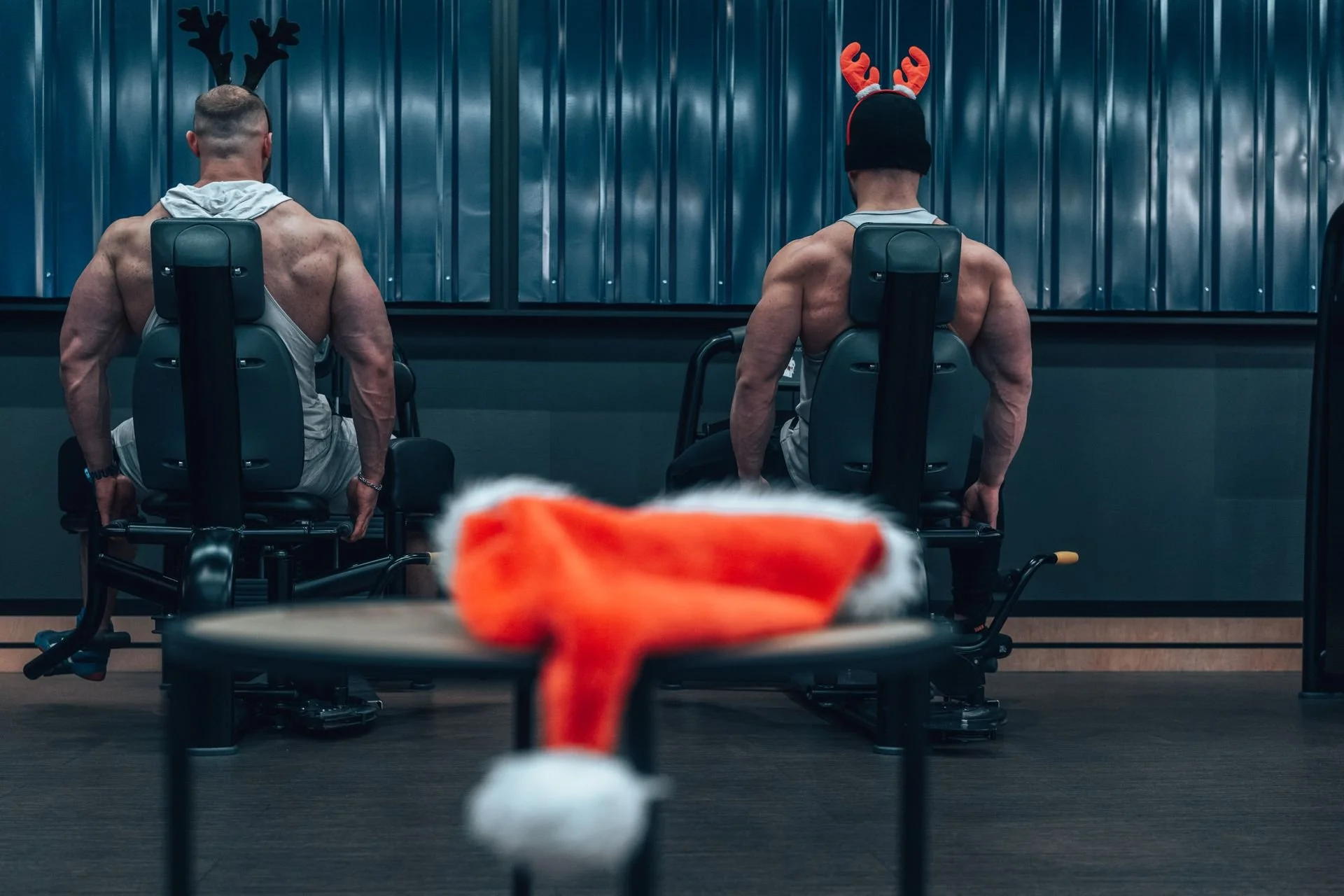
Christmas is supposed to be enjoyed, so eat the roast potatoes, have pudding and pour yourself a bevy if that’s your thing. One meal won’t erase a year of training, and nobody needs to spend Christmas Day calculating the calories in a mince pie.
The problem isn’t Christmas Day. It’s when Christmas begins on the first of December and quietly continues until halfway through January.
Have some fun, enjoy the food and relax a little. Just remember that it’s one day, not one month.
IT’S ONE DAY, NOT ONE MONTH
People talk about Christmas weight gain as though everybody wakes up in January five kilos heavier. The reality is normally far less dramatic.
In a prospective study of holiday weight gain, the average increase across the six-week festive period was about 0.37 kg. That’s considerably less than the usual horror stories, although much of the gain remained months later.
That’s the important bit. One generous meal is rarely the issue. Several weeks of eating more, drinking more and moving less can gradually add up, particularly when the festive period becomes an excuse to abandon every normal habit.
You don’t need to approach Christmas with military discipline. You just need to avoid turning one celebration into a season-long disappearance.
EAT THE FOOD YOU ACTUALLY WANT
If you love Christmas dinner, eat Christmas dinner. Have the stuffing, roast potatoes, dessert and whatever else makes it feel like Christmas to you.
What doesn’t make much sense is spending the entire month eating every dry biscuit, office chocolate and disappointing party snack simply because it’s there. Save your enthusiasm for food you genuinely enjoy.
There’s no need to starve yourself before a big meal either. Arriving ravenous normally makes it harder to notice when you’ve had enough. Eat normally earlier in the day, include some protein and then enjoy the main event without treating it as a test of character.
Food doesn’t become morally good or bad because of the date. It’s still just food, and Christmas dinner should feel like something you enjoyed rather than something you need to confess.
USE THE EXTRA FUEL
This is the part I enjoy. If I’m eating more, I like to use some of that extra fuel in the gym.
More food, particularly more carbohydrate, can leave your muscles well stocked with glycogen and give you plenty of energy for a productive strength session. If you’ve also got time away from work, why spend the entire break doing nothing?
That doesn’t mean Christmas dinner automatically becomes muscle. Your body needs a reason to use extra energy for growth, and resistance training provides that signal. Adequate protein and recovery then support the process.
A study comparing different energy surpluses in resistance-trained lifters found that faster weight gain mainly increased skinfold thickness rather than producing greater muscle growth. In other words, a little extra fuel can be useful, but a huge surplus isn’t a shortcut to bigger muscles.
Train hard, eat well and enjoy feeling properly fuelled. Just don’t call five weeks of uncontrolled eating a carefully planned bulk.
I’ve written more about realistic rates of progress in how much muscle can you gain in a month?
TRAIN BECAUSE YOU HAVE TIME
Training over Christmas shouldn’t be punishment for eating. You don’t need to earn dinner beforehand or erase it afterwards.
Train because you enjoy it, because you’ve got some extra time or because maintaining part of your normal routine makes you feel better. A good session can break up a day spent sitting around, improve your mood and give all that extra food something useful to support.
If your normal program fits, continue with it. If the gym has limited hours or your schedule is unpredictable, two or three full-body sessions will maintain plenty.
Choose one squat or lunge, one hip hinge, one press and one pull. Perform two or three proper working sets of each, mostly within six to twelve repetitions. Keep your usual 60 to 120 seconds of rest, allowing a little longer as the later sets become harder.
That’s a real workout. It doesn’t need burpees between every exercise or a festive name involving Santa’s sleigh.
A SHORTER SESSION STILL COUNTS
Christmas schedules can be chaotic. Family arrives, meals run late and an innocent visit somehow occupies the entire day.
If you’ve only got half an hour, train for half an hour. Focus on a few compound exercises, work properly and go home. A shorter session isn’t a failed version of a longer one.
If the gym is closed, go for a walk, perform a simple bodyweight session or enjoy one of the many days off without turning it into a personal crisis. Fitness doesn’t disappear because you rested on Boxing Day.
Consistency matters over months and years. No individual Christmas workout is important enough to cause an argument about when everyone is leaving for lunch.
HAVE A BEVY IF YOU WANT ONE
I gave up alcohol ten years ago, but that’s my choice, not a rule for everyone else. If you fancy a bevvy with Christmas dinner, have one and enjoy it. Christmas Day isn’t the time to count every calorie, analyse every decision or turn a glass of wine into a moral crisis. You’re an adult. You know what works for you.
I’ve covered the subject properly in can you drink alcohol without gaining weight?
DON’T PUNISH YOURSELF THE NEXT DAY
If you eat and drink more than usual, the scale may jump. That doesn’t mean every extra gram is body fat.
More carbohydrate increases stored glycogen and the water held alongside it. Salty food causes additional fluid retention, and there may simply be more food moving through your digestive system. Give your body a few normal days before deciding anything dramatic has happened.
Don’t respond by starving yourself or attempting a heroic workout while tired and dehydrated. Return to your usual meals, drink some water, get outside and train when you feel ready.
Your body doesn’t need a detox. It needs normality.
KEEP MOVING WITHOUT MAKING IT A PROJECT
A walk after lunch is one of the easiest things you can do over Christmas. It gets everybody out of the house, provides some daylight and creates a useful break before the next round of food appears.
You don’t need to march around staring at a step counter. Walk because it feels good after a large meal and because several days spent moving between the table and the sofa eventually makes anybody feel sluggish.
If the weather allows, go for a hike, cycle, play with the kids or do something vaguely active with whoever you’re spending Christmas with. Movement doesn’t stop counting because nobody called it a workout.
For more on the broader winter routine, read how to support your immune system and mood over winter.
SUPPLEMENTS ARE THE BACK-UP, NOT THE PLAN
A multivitamin won’t cancel several weeks of poor sleep, heavy drinking and a diet made entirely from party food.
If your usual meals become less consistent over Christmas, a good multivitamin can provide a reliable nutritional foundation while your routine is slightly all over the place. Performance Lab NutriGenesis Multi provides a broad range of vitamins and minerals in separate formulas for men and women.
Treat it as nutritional back-up, not permission to avoid anything green until January.

ENJOY CHRISTMAS, THEN GET BACK TO NORMAL
Christmas isn’t a fitness test. Enjoy the meal, have a drink if you want one, train if you’ve got the time and use some of that extra energy to move something heavy.
You don’t need to be perfect, and you don’t need to disappear for a month. Have a brilliant Christmas, then return to your normal routine without guilt, punishment or a ridiculous detox.
If you like fitness advice that leaves room for Christmas dinner without turning January into a punishment, Check It Oot is where I write about training, nutrition and health for people who still intend to enjoy their lives. One email once or twice a month, written by me, straight to your inbox.