
Tested and written by Martin Ebner, certified personal trainer.
Formula and evidence last checked October 2026.
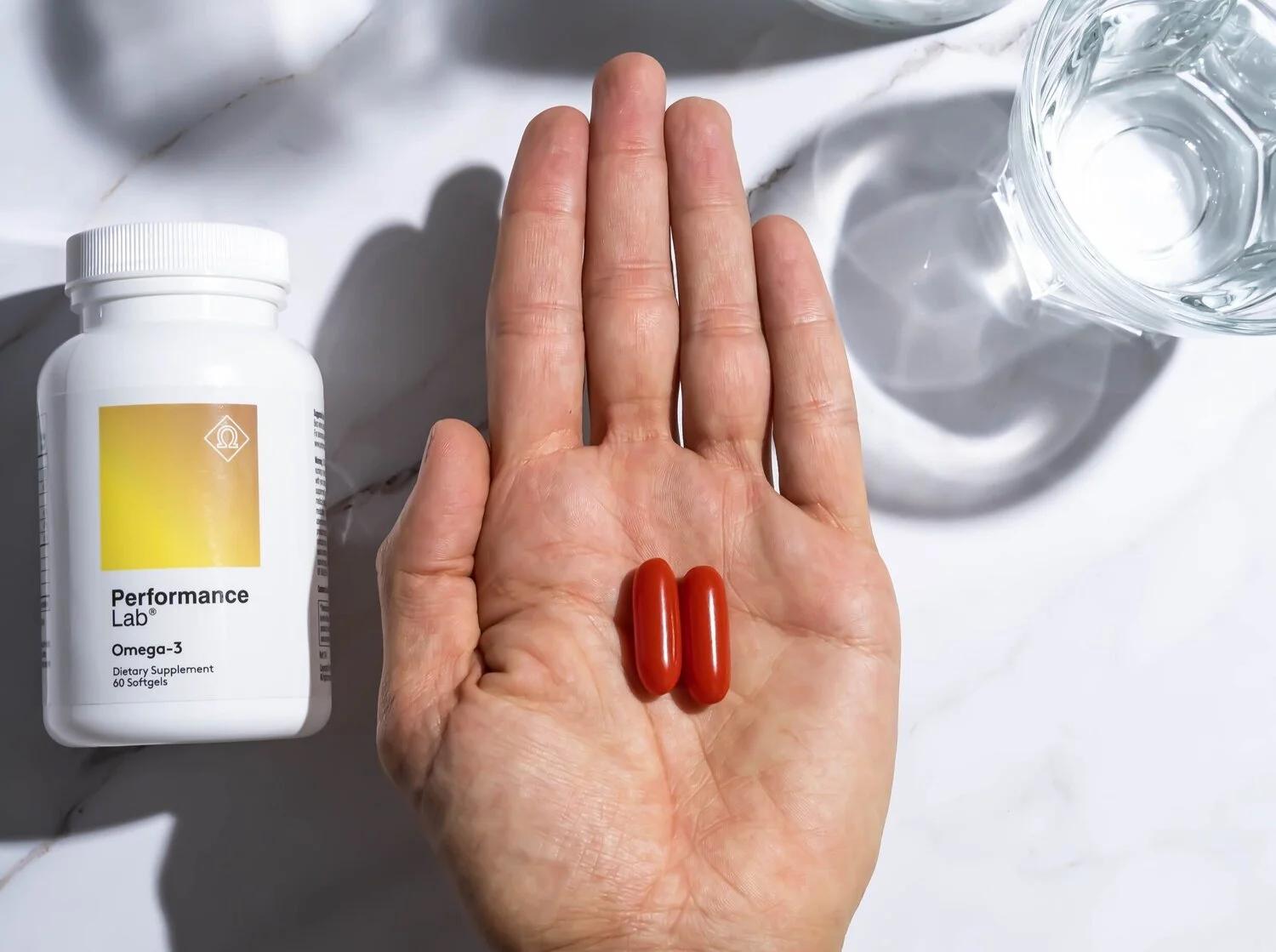
I don’t enjoy seafood. Living beside the Mediterranean hasn’t changed that. If my omega-3 intake depended on my enthusiasm for mackerel, we’d have a problem.
That’s why Performance Lab Omega-3 caught my attention. It provides EPA and DHA directly from algae rather than fish, it’s suitable for vegans and there’s no fishy smell or aftertaste. I took the previous formula every day for three months and noticed less morning stiffness and discomfort in my joints. I train hard, I’ve been doing it for more than 25 years and my joints occasionally like to remind me of both facts, so that improvement stood out.
The product has since been updated. Omega-3 v2 now uses three softgels and provides slightly different amounts of DHA and EPA. I’ve reviewed the current formula here while keeping my experience in its proper place. I can tell you what I noticed, but I’m not going to pretend that three months of taking a supplement turns me into a clinical trial.
THE QUICK VERDICT
Performance Lab Omega-3 is one of the better algae-based omega-3 supplements I’ve reviewed. It provides meaningful amounts of both DHA and EPA, uses a completely vegan formula and avoids the taste, smell and animal gelatine associated with many fish-oil capsules.
It isn’t perfect. Three capsules a day is more than the old formula required, $49 is expensive and some of the benefits promised on the product page reach further than the evidence allows. The current serving provides 810 mg of EPA and DHA combined. That’s a respectable amount for a daily supplement, but it isn’t equivalent to the much larger prescription amounts used to treat high triglycerides.
If you rarely eat oily fish, want a plant-based alternative or simply can’t face another plate of salmon, this is a strong option. If you already eat plenty of oily fish and only want the cheapest source of EPA and DHA, the premium price will be harder to justify.
My score: 8/10
Use code EXTRA10 at checkout for 10% off
PERFORMANCE LAB OMEGA-3 AT A GLANCE
Current formula: Omega-3 v2
Price when reviewed: $49 for a one-time purchase
Serving size: Three softgels
Servings per bottle: 30
Algal oil: 1,800 mg
Total omega-3 fatty acids: 990 mg
DHA: 540 mg
EPA: 270 mg
Suitable for vegans: Yes
Fish and shellfish free: Yes
My testing period: Three months with the previous formula
My score: 8/10
Prices and subscription offers can change, so check the official product page before ordering.
WHAT IS PERFORMANCE LAB OMEGA-3?
Performance Lab Omega-3 is a vegan omega-3 supplement made from algal oil. Instead of extracting EPA and DHA from fish, it goes directly to the source from which fish obtain them in the first place.
That matters because not every omega-3 is the same. Walnuts, chia seeds and flax provide alpha-linolenic acid, usually shortened to ALA. Your body can convert some ALA into EPA and DHA, but the conversion is limited. Fish, seafood and algal-oil supplements provide the longer-chain EPA and DHA more directly. The National Institutes of Health overview of omega-3 fatty acids explains the different forms and what we currently know about their roles in health.
The current formula uses life’s OMEGA 60 algal oil and comes in vegan softgels made without animal gelatine or carrageenan. Performance Lab also states that the finished product is independently tested for purity and potency and certified by the Clean Label Project.
WHAT’S IN THE CURRENT FORMULA?
Three softgels provide:
Algal oil: 1,800 mg
Total omega-3 fatty acids: 990 mg
DHA: 540 mg
EPA: 270 mg
The remaining ingredients are gellan gum, pectin, starch and glycerin, which form the capsules.
The distinction between total algal oil, total omega-3 and combined EPA and DHA is important. A large number on the front of a bottle doesn’t always tell you how much of the useful fatty acids you’re getting. Here, the figure I’d compare with another product is 810 mg of DHA and EPA combined.
The formula supplies twice as much DHA as EPA. Performance Lab describes this as an optimised ratio, but I wouldn’t treat one ratio as universally superior. DHA and EPA overlap in some areas and differ in others. The right amount also depends on why somebody is taking them. What matters here is that both are present in clearly disclosed amounts.
IS ALGAE OIL AS GOOD AS FISH OIL?
Yes, algae can provide EPA and DHA effectively. A randomised comparison of microalgal and fish oils found that EPA and DHA from the algal supplement were not inferior in their availability in the blood once the different amounts consumed were taken into account.
That doesn’t prove that every algae supplement is better than every fish oil. Product quality, freshness, concentration and testing still matter. It does mean you don’t need fish oil simply because fish is the source most people recognise.
Algal oil removes fish from the process, making it suitable for vegans and anyone with ethical or environmental concerns about fishing. It also avoids the fishy smell and burps that put plenty of people off ordinary fish oil. I didn’t experience either while taking Performance Lab Omega-3.
What I wouldn’t claim is that algae automatically makes this cleaner, safer or more effective than every properly manufactured fish oil. Those comparisons need evidence, not enthusiasm.
WHAT CAN OMEGA-3 DO FOR YOUR HEALTH?
EPA and DHA are involved in cell membranes throughout the body, with DHA particularly concentrated in the brain and retina. Omega-3 research covers everything from heart health and triglycerides to cognition, joints and exercise recovery.
That enormous research base can create another problem. A study using a prescription amount in people with a particular medical condition doesn’t prove that an ordinary supplement will produce the same result in every healthy adult. Omega-3 matters, but the claim still has to match the research.
HEART HEALTH AND TRIGLYCERIDES
Omega-3 can lower triglycerides when used in sufficiently large amounts. Prescription omega-3 products are used medically for that purpose, but they contain different formulations and often considerably more EPA or DHA than this supplement.
Research into broader cardiovascular protection is mixed. A meta-analysis of 28 randomised trials found small reductions in major cardiovascular events and cardiac death, but no significant reduction in all-cause mortality, heart attacks or strokes. That’s useful context, but it doesn’t turn a bottle of capsules into guaranteed heart protection.
Performance Lab Omega-3 can contribute EPA and DHA to your diet. It shouldn’t be presented as a treatment for high triglycerides, heart disease or anything else requiring medical care.
BRAIN AND EYE HEALTH
DHA is an important structural component of the brain and retina. Getting enough matters, particularly during periods of growth and development.
That doesn’t mean taking extra DHA will suddenly sharpen your memory, improve your eyesight or make Monday morning more exciting. Research into cognitive benefits in generally healthy adults remains inconsistent. I’d view the formula as nutritional support, particularly for somebody whose diet contains little EPA and DHA, rather than a supplement you should expect to feel working in your head.
JOINTS AND EXERCISE RECOVERY
This is where my own experience was most positive. After three months, my joints felt less stiff in the morning and generally more comfortable. That mattered to me, but it doesn’t prove the capsules caused it. Training, sleep, total food intake and the ordinary fluctuations of a forty-something body all exist at the same time.
Recent research suggests omega-3 may support recovery from exercise. A 2026 review of 43 studies found possible improvements in soreness, strength, swelling and range of motion after demanding exercise. The researchers also found substantial differences between the studies and couldn’t establish the most effective amount or duration.
Evidence around osteoarthritis is similarly cautious. A review of six randomised trials found a possible reduction in joint discomfort, but the evidence was too limited and inconsistent to support firm clinical guidance.
That makes omega-3 interesting for active people, not essential. It may support recovery and joint comfort, but it won’t replace a sensible training program, appropriate exercise selection or enough time between demanding sessions.
WHAT HAPPENED WHEN I TOOK IT FOR THREE MONTHS?
I took Performance Lab Omega-3 consistently for three months. The formula I tested was the previous version, which used two softgels and provided slightly more DHA and EPA than Omega-3 v2.
The clearest difference was less stiffness and discomfort in my joints, particularly in the morning. I didn’t suddenly become stronger, leaner or more intelligent. I felt a little better in an area where I had room to notice a difference.
The capsules were easy to take and, importantly for somebody who doesn’t enjoy seafood, there was no fishy smell, taste or repeat performance later in the day. My experience with Performance Lab’s customer service was also excellent. They answered my questions quickly and in proper detail rather than sending me a polished paragraph that didn’t answer anything.
Could the improvement in my joints have happened without the supplement? Of course. This was a personal trial, not a controlled experiment. However, my diet is naturally low in oily fish, the product solved that gap neatly and I liked it enough to continue taking it.
WHO MIGHT BENEFIT FROM TAKING IT?
Performance Lab Omega-3 makes the most sense if you rarely eat oily fish, follow a vegan or vegetarian diet, dislike seafood or want a convenient way to increase your EPA and DHA intake.
It may also appeal if you’ve tried ordinary fish oil and couldn’t tolerate the taste, smell or digestive aftermath. The algae-based formula removes all three of those objections for many people.
You don’t need to be vegan to prefer algal oil. I’m not, I simply don’t enjoy seafood and would rather take three capsules than build my weekly menu around something I have no desire to eat.
WHO PROBABLY DOESN’T NEED IT?
If you regularly eat oily fish, enjoy doing so and already obtain plenty of EPA and DHA from your diet, another supplement may add very little.
It’s also unlikely to satisfy anyone looking for an immediate, noticeable performance boost. This isn’t caffeine, creatine or a pre-workout. You may notice a difference over time if your previous intake was low, but plenty of people will feel nothing obvious.
At $49 a bottle, I wouldn’t recommend buying it without a clear reason. “Omega-3 is healthy” isn’t quite enough. Know what your diet already provides and what you want the supplement to add.
HOW TO TAKE PERFORMANCE LAB OMEGA-3
Performance Lab recommends taking three softgels with your first meal of the day. That provides the complete listed serving and gives you 30 days per bottle.
Taking them with food is sensible. It may be easier on your stomach, and dietary fat helps with the absorption of fat-soluble nutrients. Breakfast works well if that’s your most consistent meal. Lunch is perfectly acceptable if mornings are already busy enough.
Consistency matters more than the exact minute you swallow them. Omega-3 becomes incorporated into tissues over time. It isn’t something you take ten minutes before training and wait to feel.
SIDE EFFECTS AND SAFETY
I didn’t experience any side effects while taking Performance Lab Omega-3. The absence of fish also removes the taste and digestive problems some people experience with ordinary fish oil.
Omega-3 supplements can still interact with medication and aren’t automatically appropriate for everyone. Speak to a doctor or pharmacist before using one if you take anticoagulant medication, have a bleeding or heart-rhythm condition, are preparing for surgery, are pregnant or breastfeeding, or have another reason to question whether it suits you.
More isn’t automatically better. The three-capsule serving already supplies 810 mg of EPA and DHA. Don’t stack several omega-3 products without checking the combined amount.
IS PERFORMANCE LAB OMEGA-3 GOOD VALUE?
At $49 for 30 servings, the full serving costs roughly $1.63 per day. That places it firmly in the premium end of the omega-3 market.
You can buy fish oil for considerably less. You’re paying extra for an algae-based source, clearly disclosed amounts, vegan capsules, independent quality testing and the absence of fishy taste or smell.
When comparing products, look at the amount of EPA and DHA rather than the total weight of oil printed most prominently on the label. A cheap 1,000 mg fish-oil capsule may contain far less than 1,000 mg of EPA and DHA. Equally, a premium label doesn’t make a product better by itself.
I think Performance Lab Omega-3 offers good value for somebody who specifically wants a high-quality vegan product and will take it consistently. If none of those features matter to you, cheaper options exist.
WHAT I LIKE
It provides meaningful amounts of both DHA and EPA
Every active amount is clearly disclosed
The algae-based formula is suitable for vegans
There’s no fishy taste, smell or aftertaste
It avoids animal gelatine and carrageenan
Performance Lab states that it’s independently tested for purity and potency
The formula contains no caffeine, artificial colours or preservatives
I noticed less morning stiffness and joint discomfort during my trial
My experience with the company’s customer service was excellent
WHAT I DON’T LIKE
Three softgels a day is less convenient than the previous two
$49 per bottle is expensive
The current formula provides slightly less DHA and EPA than the version I tested
The finished product hasn’t been tested in a controlled human trial
Some claims on the product page are stronger than the wider evidence supports
Its 2:1 DHA-to-EPA ratio isn’t automatically superior for every purpose
People who already eat plenty of oily fish may gain very little from it
It’s only available directly from Performance Lab
FREQUENTLY ASKED QUESTIONS
IS PERFORMANCE LAB OMEGA-3 FISH OIL?
No. Its EPA and DHA come from algal oil rather than fish. The current formula contains no fish or shellfish ingredients and is suitable for vegans.
HOW MUCH EPA AND DHA DOES IT CONTAIN?
Three softgels provide 540 mg of DHA and 270 mg of EPA. That’s 810 mg combined, within 990 mg of total omega-3 fatty acids.
DOES IT CAUSE FISHY BURPS?
It contains no fish oil, and I didn’t experience any fishy taste, smell or burps while taking it. Individual digestion varies, but avoiding fish removes the most obvious source of the problem.
IS ALGAE OMEGA-3 ABSORBED PROPERLY?
Yes. Human research shows that algal oil can deliver EPA and DHA effectively. Its plant-based source doesn’t make it an inferior substitute for fish oil.
IS IT GOOD FOR BUILDING MUSCLE?
I wouldn’t buy it specifically to build muscle. Omega-3 may support aspects of recovery and normal muscle function, but protein, total food intake, progressive training and creatine have much stronger practical claims on your attention.
If you’re looking for something designed specifically around training, read my Pre Lab Pro review.
CAN YOU TAKE IT WITH A MULTIVITAMIN?
For most healthy adults, an omega-3 supplement and a multivitamin perform different jobs and can be used together. Check the complete labels, any medication you take and your individual needs rather than assuming that every supplement stacks neatly with every other one.
You can read my Performance Lab Multi review if you’re considering both.
HOW LONG DOES IT TAKE TO WORK?
There’s no reliable countdown. EPA and DHA levels change over weeks of consistent intake, and many of the benefits associated with omega-3 aren’t sensations you can feel.
I noticed less joint stiffness during a three-month trial. Somebody else may notice nothing, particularly if their omega-3 intake was already adequate.
MY FINAL VERDICT
Performance Lab Omega-3 is a high-quality supplement that solves a very ordinary problem well. Plenty of people don’t eat enough oily fish. Some dislike it, some follow a vegan diet and others would simply rather take three capsules than negotiate with a sardine.
The formula provides useful amounts of DHA and EPA from algae, discloses everything clearly and avoids the fishy aftertaste that ruins many cheaper products. I also had a positive experience during my three-month trial, particularly with joint comfort.
I’m less convinced by the suggestion that one particular DHA-to-EPA ratio is optimal for everyone, and the product page gives omega-3 credit for more than this specific formula has proved. The price is also difficult to ignore.
Would I take it again? Yes. My diet is low in oily fish, I liked the product and it filled a genuine gap. Would I tell everybody to spend $49 a month on it? No. If you already eat plenty of oily fish, you may be paying to solve a problem you don’t have.
For the right person, it’s a very good vegan omega-3 and an easy 8/10.
Use code EXTRA10 at checkout for 10% off
LOOKING FOR SOMETHING MORE SPECIFIC?
Omega-3 is a foundational supplement rather than a noticeable performance product. For broader nutritional cover, read my Performance Lab Multi review. For training energy and focus, there’s my Pre Lab Pro review. If sleep is the part that needs attention, start with my Performance Lab Sleep review. If none of those quite fits, my supplement reviews and guides page covers the rest.
The supplement industry can make three capsules sound like the final piece of your personality. Check It Oot is where I sort what earns its place from what belongs back on the shelf. One email once or twice a month, written by me, straight to your inbox.