
Tested and written by Martin Ebner, certified personal trainer.
Formula and evidence last checked October 2026.
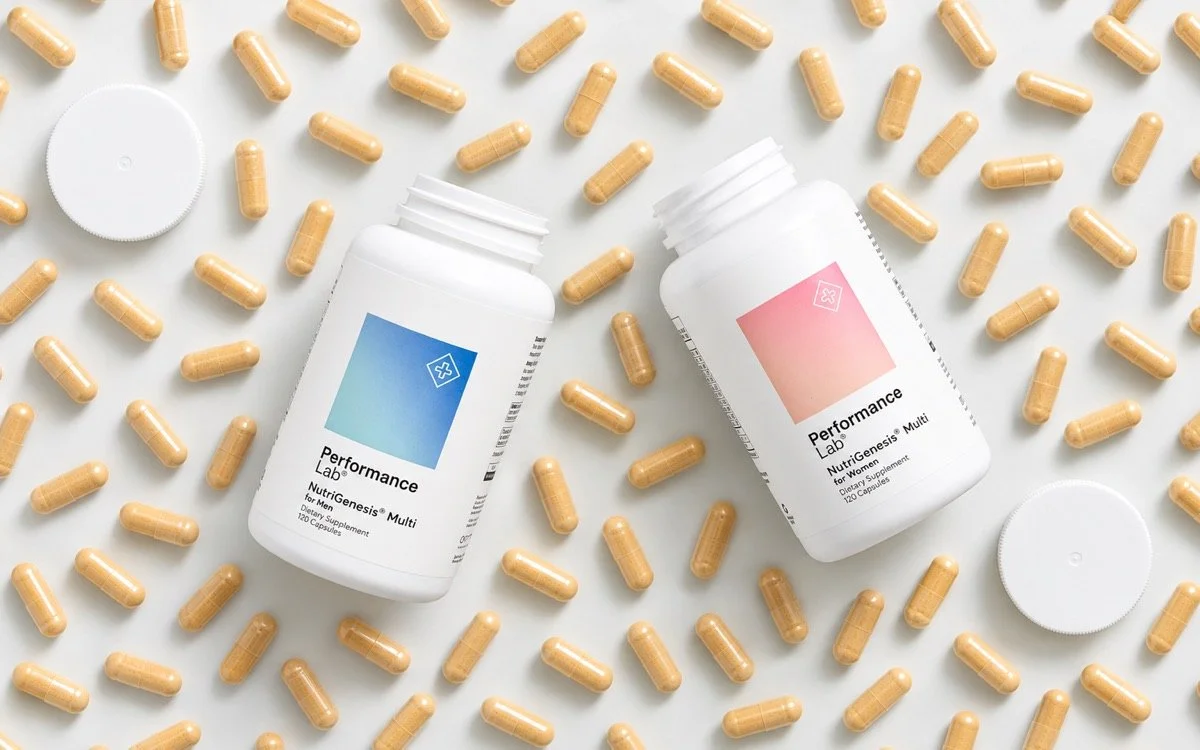
Multivitamins are difficult to review because the honest answer is rarely dramatic. I didn’t take Performance Lab Multi and suddenly wake up with twice the energy, perfect skin and a completely different life. I took it every day for three months, carried on eating properly and felt much the same.
That doesn’t automatically make it useless. A multivitamin is meant to cover small nutritional gaps, not announce itself like a pre-workout. When I was travelling, busy or feeling a little run down, I liked knowing that the basics were covered even if my meals weren’t quite as organised as usual.
That’s the standard I’ve used for this review. Not whether the marketing sounds impressive, but whether the formula is sensible, the evidence holds up and I’d genuinely spend my own money on it.
PERFORMANCE LAB MULTI: THE QUICK VERDICT
Performance Lab Multi is one of the better formulated multivitamins I’ve reviewed. It contains a broad range of vitamins and minerals, uses separate formulas for men and women, is suitable for vegans and doesn’t hide behind a proprietary blend.
It isn’t perfect. Four capsules a day is quite a commitment, the one-time price was $49 when I last checked, and it won’t provide enough magnesium, calcium or potassium to cover those nutrients properly. Performance Lab also makes strong claims about the absorption of its NutriGenesis ingredients, but I couldn’t find an independent trial comparing the finished product with an ordinary multivitamin.
I still think it’s a very good daily safety net for someone whose diet isn’t perfect every day. That includes most of us.
My score: 8/10
Use code EXTRA10 at checkout for 10% off
PERFORMANCE LAB MULTI AT A GLANCE
Price when reviewed: $49 for a one-time purchase
Servings: 30
Full serving: Four capsules
Versions: Separate men’s and women’s formulas
Suitable for vegans: Yes
Caffeine-free: Yes
My testing period: Three months
Money-back guarantee: 30 days
My score: 8/10
WHAT IS PERFORMANCE LAB MULTI?
Performance Lab Multi is a daily multivitamin and mineral supplement available in separate men’s and women’s formulas. Each full serving contains 24 vitamins, minerals and nutritional cofactors.
The foundation is solid. You get vitamins A, C, D, E and K, a full range of B vitamins, plus iron, iodine, magnesium, zinc, selenium, copper, manganese, chromium and molybdenum. Inositol and boron are included too.
The capsules are vegan and free from gluten, caffeine, synthetic additives, artificial colours and preservatives. Performance Lab also says the product is independently tested for purity and potency.
It’s comprehensive for a multivitamin, but comprehensive doesn’t mean complete. It should support a decent diet, not attempt to replace one.
WHAT’S THE DIFFERENCE BETWEEN THE MEN’S AND WOMEN’S FORMULAS?
Most of the formula is identical. Both versions provide the same amounts of vitamins C, D, E and K, the main B vitamins, iodine, magnesium, copper, manganese, chromium, molybdenum, inositol and boron.
The main differences are:
PERFORMANCE LAB MULTI FOR WOMEN
Vitamin A: 500 mcg
Biotin: 300 mcg
Iron: 8 mg
Zinc: 10 mg
Selenium: 100 mcg
PERFORMANCE LAB MULTI FOR MEN
Vitamin A: 600 mcg
Biotin: 200 mcg
Iron: 4 mg
Zinc: 15 mg
Selenium: 150 mcg
The higher iron content in the women’s formula may make sense for people who menstruate, while the men’s version provides more zinc and selenium. That doesn’t mean everyone of the same sex has identical nutritional needs. Your diet, age, health and any genuine deficiency matter far more than the colour of the bottle.
DOES IT PROVIDE EVERYTHING YOU NEED?
No, and no sensible multivitamin should pretend otherwise.
Performance Lab Multi provides plenty of several vitamins, but only 40 mg of magnesium, which is 10% of the US Daily Value. It isn’t going to cover calcium or potassium in a meaningful way either.
That isn’t necessarily poor formulation. Minerals take up a lot of physical space, and putting useful amounts of magnesium, calcium and potassium into the same product would make the daily serving enormous.
Food still has to do the heavy lifting. A multivitamin can fill some gaps, but it can’t replace vegetables, fruit, protein, healthy fats or a varied diet.
WHAT DOES NUTRIGENESIS MEAN?
NutriGenesis is Performance Lab’s name for its cultured vitamins and minerals. The company says these nutrients are produced with natural cofactors that help the body recognise and absorb them more effectively than conventional synthetic alternatives.
It’s an interesting approach, and I like the attention paid to ingredient quality. The part I’d treat more carefully is the suggestion that this automatically makes the finished product substantially better absorbed than competing multivitamins.
I couldn’t find an independent human trial comparing Performance Lab Multi directly with a standard multivitamin. That doesn’t mean the technology offers no benefit. It means the size of that benefit hasn’t been established convincingly enough for me to repeat the marketing as fact.
I’d describe NutriGenesis as a promising feature of the formula, not proof that every nutrient will outperform a cheaper alternative.
DO MULTIVITAMINS ACTUALLY WORK?
That depends entirely on what you expect them to do.
If your diet is missing a particular nutrient, correcting that gap can make a real difference. If you already get everything you need from food, taking more won’t necessarily make you healthier, stronger or more energetic.
The National Institutes of Health overview of multivitamins reflects that uncertainty. Multivitamins can help people meet recommended nutrient intakes, but the evidence that they prevent major chronic diseases in otherwise healthy adults is mixed.
A large 2024 study involving nearly 400,000 adults found no association between regular multivitamin use and a lower risk of death. On the other hand, the COSMOS trials in older adults reported a modest cognitive benefit from taking a daily multivitamin. That study used a different product, so it doesn’t prove that Performance Lab Multi produces the same result.
The honest answer is that a multivitamin can be useful nutritional insurance. It isn’t a shortcut to perfect health.
WHAT HAPPENED WHEN I TOOK IT FOR THREE MONTHS?
I eat well most of the time. My meals are fairly repetitive, but they’re built around good ingredients and I pay attention to what my body needs. Because of that, I didn’t expect a multivitamin to transform the way I felt.
It didn’t.
I didn’t notice a dramatic change in my energy, focus, training or recovery. I’m not going to invent one simply because this is a supplement review.
What I did appreciate was the reassurance. I travel fairly often and sometimes have weeks when work takes over, meals become less organised and my usual routine slips slightly. During those periods, taking Multi felt like a sensible backup.
That’s difficult to turn into an exciting before and after story, but it’s probably the most honest reason to use a multivitamin. You aren’t looking for a buzz. You’re covering your bases.
I also contacted Performance Lab with several questions and found its customer service excellent. The replies were quick, detailed and genuinely helpful.
WHO MIGHT BENEFIT FROM TAKING IT?
Performance Lab Multi makes the most sense for someone who generally tries to eat well but knows that real life occasionally gets in the way.
That might include people who travel regularly, work unpredictable hours, follow a restrictive diet or simply don’t eat a wide enough range of foods every day. Vegans may find the B12, iron, iodine, zinc and vitamin D useful, although no multivitamin removes the need to plan a vegan diet properly. I’ve covered that in my guide to building muscle on a vegan diet.
People eating significantly less food may also have more difficulty covering every micronutrient. That can include anyone dieting aggressively or using weight-loss medication that greatly reduces their appetite. A multivitamin may help with some gaps, but it shouldn’t replace medical advice, blood tests or a proper look at what you’re actually eating.
You don’t need a dreadful diet to benefit from nutritional insurance. You just need to recognise that nobody eats perfectly all the time.
WHO PROBABLY DOESN’T NEED IT?
If your diet is varied, your blood results are healthy and you’re already taking several individual vitamins and minerals, another supplement may add very little.
It’s also the wrong product if you’re looking for an immediate surge in energy. Fixing a genuine deficiency can help you feel better, but taking large amounts of nutrients you already get from food won’t turn a normal Tuesday into the best day of your life.
More isn’t automatically better. Check what’s already included in any other supplements you take so that you don’t keep stacking the same nutrients without realising it.
HOW SHOULD YOU TAKE PERFORMANCE LAB MULTI?
Performance Lab recommends taking two to four capsules daily, with the full serving split into two capsules in the morning and two in the afternoon.
The company says it can be taken with or without food. I’d personally take it with breakfast and lunch. Vitamins A, D, E and K are fat-soluble, so a meal containing some dietary fat makes sense, and taking capsules with food tends to be easier on the stomach.
Four capsules may be more than some people want to swallow every day. Taking only two reduces that burden, but it also gives you half of every listed amount. You can’t halve the capsules and still claim the full label.
SIDE EFFECTS AND SAFETY
I didn’t have any problems taking Performance Lab Multi, but that doesn’t mean everyone should use it without thinking.
Vitamin K can interact with anticoagulant medication such as warfarin. The formula also contains iron, iodine and relatively high amounts of several B vitamins, zinc and selenium. If you have a medical condition, take regular medication or already use several supplements, it’s worth checking the combined amounts with an appropriately qualified professional.
This isn’t a prenatal multivitamin. Anyone who is pregnant, breastfeeding or trying to conceive should choose supplements around their specific requirements with professional guidance.
IS PERFORMANCE LAB MULTI GOOD VALUE?
At $49 for 30 full servings, this sits firmly in the premium multivitamin category. That works out at roughly $1.63 per day at the full four-capsule dose.
You can buy a basic multivitamin for far less. What you’re paying for here is the cleaner formulation, separate men’s and women’s versions, vegan capsules, independent quality testing and Performance Lab’s NutriGenesis ingredients.
Whether that’s worth it depends on what you value. If you simply want the cheapest way to cover a few basic nutrients, this probably isn’t it. If ingredient quality, transparency and a clean formula matter to you, the price is easier to justify.
I don’t think the evidence proves that it will transform your health or dramatically outperform every cheaper multivitamin. I do think it’s a well-made product from a company that takes formulation seriously.
WHAT I LIKE
Broad and clearly disclosed formula
Separate men’s and women’s versions
Vegan and free from common allergens
No caffeine, artificial colours or preservatives
Useful vitamin D, B vitamin, iodine and zinc content
Strong customer service
30-day money-back guarantee
WHAT I DON’T LIKE
Four capsules per day at the full serving
Premium price
Very little magnesium
Not a useful source of calcium or potassium
NutriGenesis absorption claims aren’t supported by an independent trial of the finished product
Some nutrients are already well above 100% of the Daily Value
MEN’S OR WOMEN’S: WHICH ONE SHOULD YOU CHOOSE?
For most people, the obvious version will be perfectly reasonable. The women’s formula contains more iron and biotin, while the men’s formula contains more zinc and selenium.
The decision becomes less obvious if your individual needs don’t match those assumptions. Someone with low iron may need more than either version provides, while someone who has been advised to avoid supplemental iron may prefer the lower-iron formula.
A multivitamin is built for broad convenience. It can’t be personalised to your diet or blood results, so don’t expect the label to know more about your body than you do.
MY FINAL VERDICT
Performance Lab Multi is a very good multivitamin, but I wouldn’t call it essential for everyone.
I didn’t feel a dramatic difference during the three months I took it. Given that I already eat a healthy and varied diet, I wasn’t particularly surprised. Its value was quieter than that. It gave me a reliable nutritional safety net when travel, work or life made my food less consistent.
I like the formula, the transparency and the quality standards. I’m less convinced by some of the stronger absorption claims, and I’d prefer fewer capsules or a more meaningful amount of magnesium.
Would I take it again? Yes, particularly during busy or travel-heavy periods. Would I tell everyone they need it for the rest of their life? No. Food comes first, and a multivitamin should support that foundation rather than pretend to replace it.
My score: 8/10
Use code EXTRA10 at checkout for 10% off
LOOKING FOR SOMETHING MORE SPECIFIC?
A multivitamin covers the foundations. If you’re looking for support in a particular area, I’ve also tested a few more targeted options. You’ll find those and the rest of my supplement reviews and guides in one place.
For training, read my Pre Lab Pro review. For focus and demanding workdays, there’s my Mind Lab Pro review. If sleep is the part that needs attention, start with my Performance Lab Sleep review.
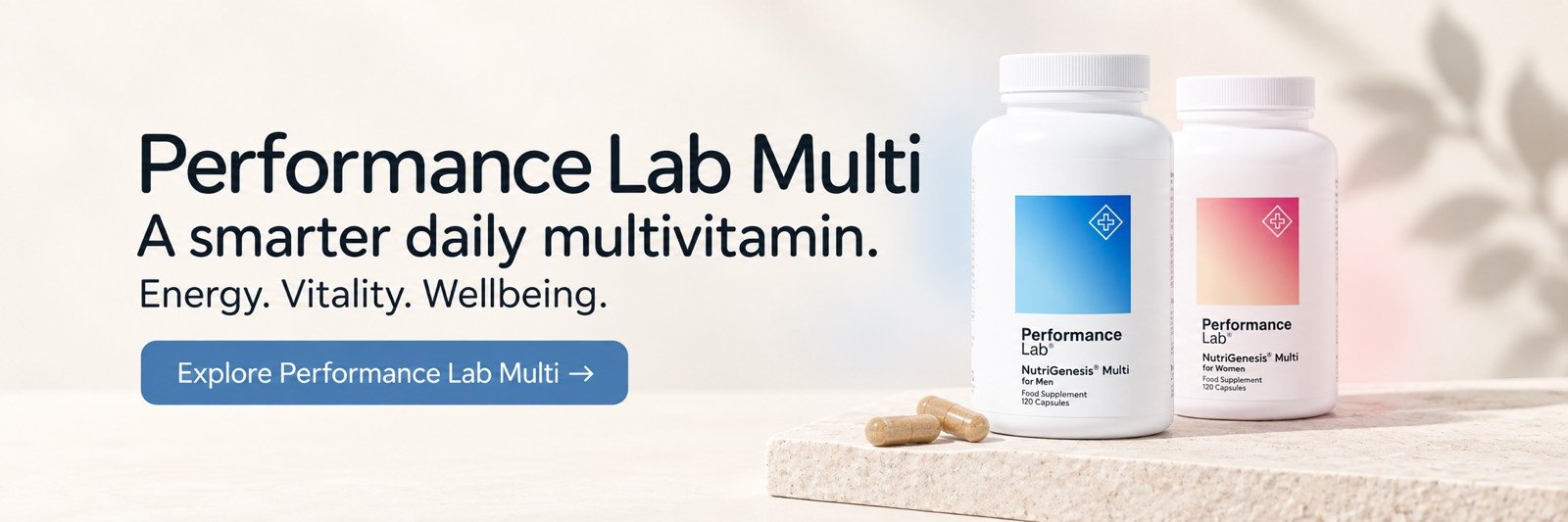
If you’ve ever looked at a supplement shelf and wondered whether you need all of it, none of it or just a better lunch, Check It Oot is where I sort through the noise. One email once or twice a month, written by me, straight to your inbox.