
Written by Martin Ebner
Updated Sept 2026
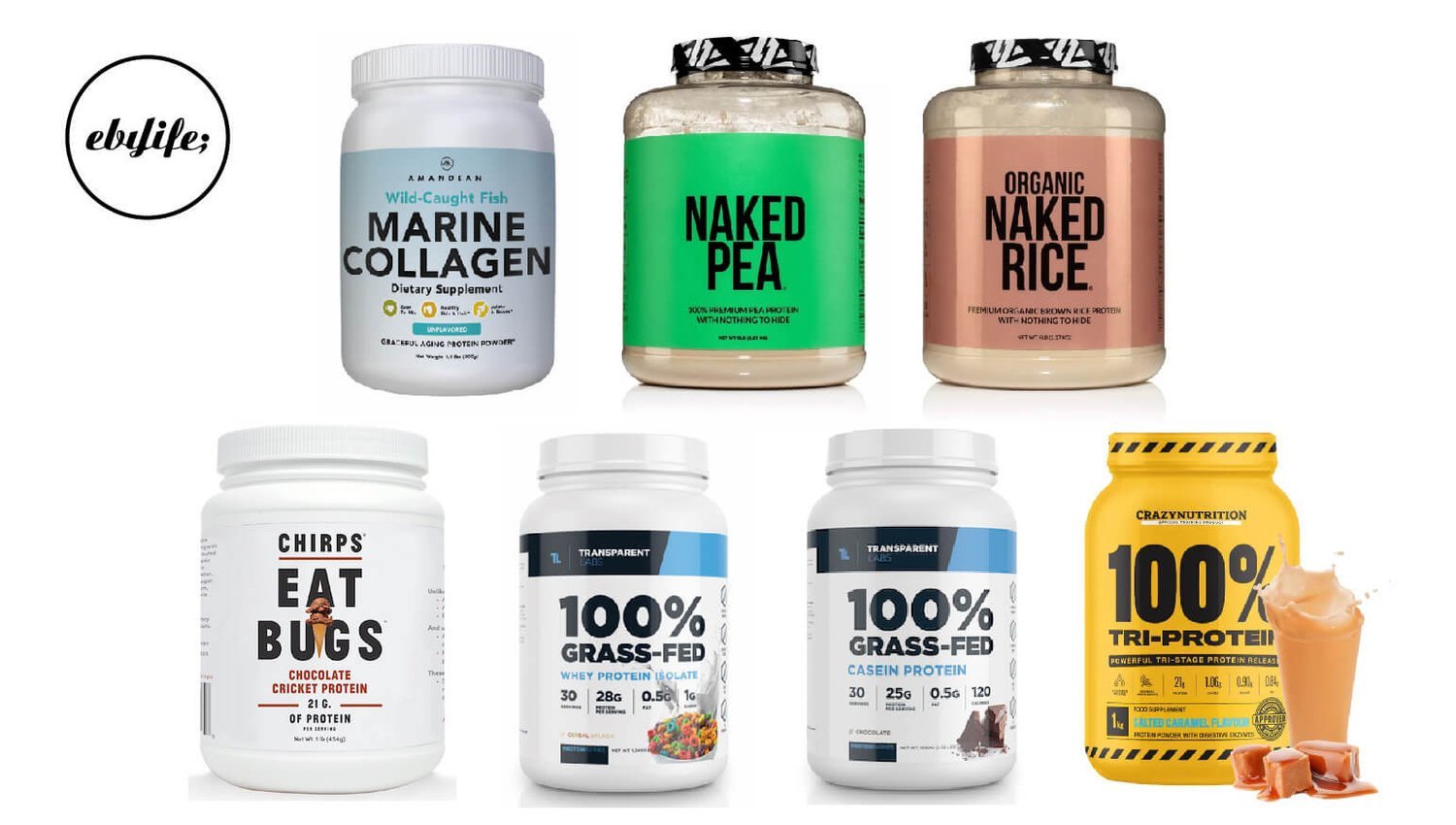
Protein is my favourite of the three macronutrients. I’m not sure anyone needs a favourite macronutrient, but there we are.
Protein powder is useful when it solves a practical problem. If you can get enough protein from food without turning every meal into a calculation, you don’t need it. If breakfast is rushed, you struggle to eat after training or your target simply feels like too much food, a scoop can make life considerably easier.
It still isn’t a muscle-building shortcut. The training has to give your body a reason to adapt, your overall diet needs to support the work, and the powder is there to fill a gap. The best one is usually the one that agrees with your stomach, fits your diet and doesn’t cost a fortune per serving.
THE SHORT ANSWER
Whey isolate is my best all-round choice if you eat dairy and want plenty of protein without much fat, carbohydrate or lactose. Whey concentrate is usually better value, casein is thicker and slower to digest, and a milk protein blend sits somewhere between the two.
If you don’t eat dairy, soy is a very strong alternative. Pea protein is easy to find and generally mixes well, while rice protein can work on its own but makes more sense as part of a varied diet or combined with pea.
There isn’t one tub that beats every other tub. Choose the type that suits you, then compare the label, serving size, price and testing.
HOW MUCH PROTEIN DO YOU NEED TO BUILD MUSCLE?
You don’t need the 3g to 5g of protein per kilogram of bodyweight that still gets thrown around in bodybuilding circles. A large systematic review and meta-analysis found that the benefits for fat-free mass tended to level off at around 1.6g per kilogram per day. Going a little higher can give you some breathing room, but more isn’t automatically better.
For somebody who weighs 80kg, 1.6g per kilogram is 128g of protein a day. That’s a total from food and supplements, not 128g of powder. You might get there comfortably with eggs, yoghurt, fish, meat, tofu, pulses and normal meals. If you regularly finish the day 25g short, that’s where a shake earns its place.
I’d also spread that protein across the day rather than saving most of it for dinner. You don’t need to live by an alarm, but three or four useful servings generally makes more sense than one enormous one.
WHAT TO LOOK FOR IN A PROTEIN POWDER
Start with the amount of protein per serving. Roughly 20g to 30g is practical for most people, although your bodyweight, diet and the rest of the meal matter. Then check how large the serving actually is. Twenty-five grams of protein in a 30g scoop is a very different product from twenty-five grams in a 70g scoop full of added carbohydrate and fat.
Look at the ingredient list as well. A flavoured powder will need more than one ingredient, but it doesn’t need to read like the contents of a chemistry cupboard. If you’re sensitive to lactose, sweeteners or gums, the cleanest-looking label isn’t necessarily the best one for you. The powder you can digest comfortably wins.
Finally, look for independent batch or third-party testing, particularly if you compete in tested sport. Don’t assume that a lovely tub and the word “premium” tell you anything useful. Work out the cost per 25g of protein, not the cost of the container.
1. WHEY PROTEIN ISOLATE
Whey isolate is the easiest all-round recommendation for somebody who eats dairy. It’s rich in essential amino acids, including leucine, mixes easily and usually provides a high percentage of protein by weight. Much of the lactose, fat and carbohydrate has been removed during processing, so some people tolerate it better than whey concentrate.
I’ve used Transparent Labs Grass-Fed Whey Isolate and still think the powder itself is good. One scoop currently provides 28g of protein, and the formula avoids artificial colours, preservatives and artificial sweeteners. It’s a useful example of what a straightforward isolate should look like.
Isolate tends to cost more, and that extra money is wasted if you digest concentrate perfectly well. Choose it because the lower lactose or leaner label is useful to you, not because the word isolate sounds more advanced.
2. WHEY PROTEIN CONCENTRATE
Whey concentrate is usually the best-value dairy option. It contains a little more lactose, carbohydrate and fat than isolate, but it still gives you a complete, high-quality protein and supports resistance training perfectly well.
For most people, the difference between a good concentrate and an isolate matters less than the difference between reaching their daily protein target and missing it. If concentrate tastes better, sits well and costs noticeably less, there’s no prize for buying the more processed version.
Check the protein percentage because concentrates vary. A product with about 20g to 25g of protein in a sensible scoop is fine. A huge serving padded with sugar is a different product wearing a similar label.
3. MICELLAR CASEIN
Casein is the other main protein found in milk. It digests more slowly than whey and becomes much thicker when mixed, which can make it more filling. I quite like it in the evening or stirred into yoghurt, but you don’t have to take it before bed to protect your muscles from disappearing overnight.
Transparent Labs Grass-Fed Casein is one I’ve used. It currently provides 25g of protein per serving and uses micellar casein as its protein source. It mixes considerably thicker than whey, which is either exactly what you want or a reason to choose something else.
Casein isn’t better than whey for building muscle across the day. It’s simply a different texture and digestion speed. If you’re lactose intolerant or allergic to dairy, it may still cause problems, so slower doesn’t mean gentler for everybody.
4. A MILK PROTEIN BLEND
A milk protein blend combines faster and slower dairy proteins, usually whey with casein or milk protein concentrate. That can produce a thicker shake with a balanced amino-acid profile and makes it a flexible option at breakfast, between meals or after training.
The blend itself can be perfectly useful. What I wouldn’t pay extra for is marketing about several digestion speeds producing several times the muscle growth. Choose one because it tastes good, agrees with your stomach and gives you a sensible amount of protein per serving.
5. SOY PROTEIN ISOLATE
Soy isolate is one of the strongest single-source plant options. It’s a complete protein, meaning it provides all nine essential amino acids, and it generally has more leucine than many other plant proteins.
Longer-term research is more useful than arguments about which powder creates the biggest short-term spike. A meta-analysis comparing soy with animal proteins found no meaningful difference in gains in strength or lean mass during resistance training. If soy suits your diet and digestion, you don’t need to treat it as a second-rate choice.
Choose a plain isolate if you want the simplest formula, or a flavoured version if that makes you more likely to use it. If you have a soy allergy, obviously choose something else.
6. PEA PROTEIN
Pea protein is widely available, dairy-free and usually easy to mix. It has a decent essential-amino-acid profile, although it’s relatively low in methionine. That isn’t a crisis if the rest of your diet includes other protein sources.
Naked Pea is the version I’ve used. The unflavoured powder has one ingredient and currently provides 27g of protein per serving. It’s exceptionally simple, even if nobody could accuse the taste of being exciting.
Pea can taste earthy on its own. A flavoured version or a blend with rice often makes it easier to live with. If it helps you hit a sensible daily target consistently, it can support muscle growth perfectly well. In one recent controlled trial in older men, pea and whey both increased muscle protein synthesis, while collagen didn’t.
7. RICE PROTEIN, OR A RICE AND PEA BLEND
Brown rice protein is another useful dairy-free option. It’s relatively low in lysine, so I wouldn’t build an entire diet around it, but you don’t need every individual food or scoop to be perfect. What matters is the amino-acid intake across your whole diet.
I’ve used Naked Rice since Performance Lab discontinued its rice protein. It’s unflavoured, has one main ingredient and currently provides 25g of protein per serving. The flavour is neutral enough to disappear into a smoothie, which is how I prefer to use it.
A rice and pea blend is often the more rounded choice because the two amino-acid profiles complement one another. If you already eat a varied diet with tofu, beans, lentils, grains, nuts and seeds, plain rice protein can still be a practical top-up. My guide to plant-based protein sources for building muscle covers the food side properly.
WHY COLLAGEN ISN’T ON THIS LIST
Collagen is protein, but that doesn’t make it one of the best protein powders for building muscle. It’s low in essential amino acids and doesn’t provide tryptophan, so it shouldn’t replace whey, dairy, soy, pea or another complete protein in your daily target.
It may have a place for somebody buying it for skin, joints or connective tissue, but that’s a different job. Studies comparing the two have found whey more effective than collagen for stimulating muscle protein synthesis. If building muscle is the job, collagen doesn’t belong in the top seven. I’ve compared collagen and whey for building muscle in more detail if you’re deciding which one actually suits your goal.
WHEN SHOULD YOU TAKE PROTEIN POWDER?
Take it when it makes your diet easier. After training is convenient, but you don’t need to sprint towards a shaker before an imaginary anabolic window slams shut. If you’ve eaten a protein-containing meal before training, the urgency is even lower.
I usually care more about whether somebody reaches a sensible daily total and spreads it across a few meals. Breakfast, after training or as part of an afternoon snack can all work. Casein might suit the evening because it’s thick and filling, but a normal protein-rich meal does the job too.
Protein powder isn’t a meal replacement unless the rest of the shake makes it one. A scoop with water gives you protein, not the fibre, vitamins, minerals, carbohydrate and fats found in a proper meal.
THE BOTTOM LINE
If you eat dairy, whey isolate is my best all-round choice, whey concentrate is usually the best value, and casein or a blend can be useful when you want something thicker and more filling. If you avoid dairy, soy, pea and rice-based powders can all support muscle growth when your overall diet is well planned.
Choose the powder that fills a real gap, agrees with your stomach and survives your budget. Then get back to the part that matters: following a decent muscle-building program for long enough to let it work.
If you prefer your nutrition advice without a miracle attached to every tub, Check It Oot is my newsletter. I send it when I’ve got something worth saying, which is usually once or twice a month.