
A beginner’s guide to weight training and muscle gain
By Martin Ebner
Updated Sept 2026
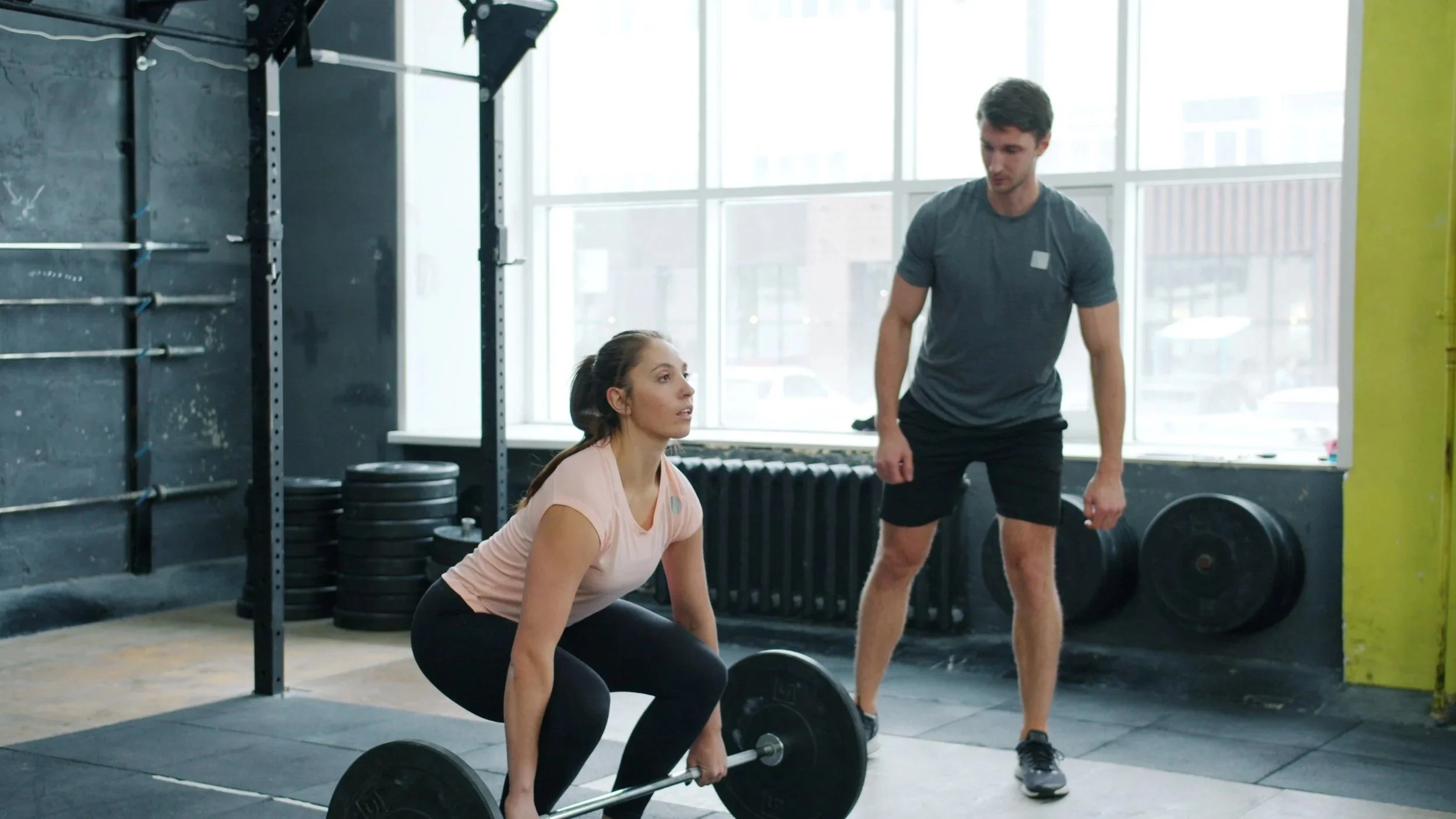
Starting weight training is easier than the fitness industry makes it look. You don’t need a six-day split, a shelf full of supplements or the confidence to walk into a gym knowing what every machine does.
You need a program small enough to repeat, a few movements you can perform safely and enough patience to let them work. If muscle gain is the goal, your first job isn’t finding the cleverest exercise. It’s building the consistency that gives any exercise a chance to work.
SET A GOAL YOU CAN ACTUALLY TRAIN FOR
“Get fit” is a perfectly reasonable ambition, but it doesn’t tell you what to do when you reach the gym. Decide what matters most over the next couple of months. It might be getting stronger, building muscle, losing some fat or simply establishing a routine.
You don’t need twelve goals at once. Pick one primary target and let it guide the program. If you want to build muscle, strength training becomes the priority. If you’re preparing for a running event, the running needs to lead and the weights should support it.
The goal can change later. For now, it just needs to give your training some direction.
PICK A SCHEDULE YOU CAN ACTUALLY KEEP
Two consistent sessions beat five ambitious ones that disappear after a fortnight. Most beginners will do well with two or three full-body workouts each week, ideally with a rest day between them.
A split routine isn’t inherently better or worse. A systematic review comparing full-body and split routines found similar strength and muscle growth when the total training volume was comparable. Full-body training simply makes practical sense for a beginner because every major muscle group gets regular attention, even if you miss the occasional session.
Choose your training days before choosing your exercises. If Monday, Wednesday and Friday genuinely fit your life, brilliant. If you can only manage Tuesday and Saturday, build around that instead of pretending you’re going to train six days a week.
TRAIN YOUR WHOLE BODY
A balanced program should cover the basic movement patterns: a squat or lunge, a hip hinge, a push, a pull and some direct work for your core. You don’t need every possible variation of each one.
I love leg day, so I’m hardly neutral, but skipping your lower body is still a terrible idea. Your legs and glutes contain some of the largest muscles in your body, and training them improves far more than the way you look in shorts. Squats, lunges, deadlifts, hip hinges and leg presses should earn their place before another variation of biceps curls.
Free weights and machines can both be useful. Machines provide stability and can make some movements easier to learn, but you still need to adjust them properly and pay attention to what you’re doing. A fixed path doesn’t make careless technique harmless.

LEARN THE MOVEMENT BEFORE CHASING THE WEIGHT
There’s no prize for putting too much weight on a bar you can’t control. Begin with a load that lets you move through a comfortable range, keep your balance and repeat the movement without your technique falling apart.
Add weight gradually as the exercise becomes more familiar. Five controlled repetitions will always be more useful than ten performed for the benefit of whoever happens to be watching.
If an exercise causes pain, stop and work out why. You might need to adjust your setup, reduce the load or use a different movement. For every exercise that isn’t right for you, there are five that probably are.
If you’re unsure how to perform the main lifts, a few sessions with a personal trainer can save months of guessing. It’s not the only way to start, but it’s a sensible option if technique is the part holding you back.
A SIMPLE THREE-DAY BEGINNER PROGRAM
Alternate Workout A and Workout B across three non-consecutive days. Your first week would be A, B, A. The following week becomes B, A, B.
If you can only train twice a week, complete A and B once each. If you’re completely new, start with two working sets per exercise for the first couple of weeks before moving to the sets shown below.
Before each session, spend five minutes getting warm and complete one or two lighter practice sets before your first major exercises. The warm-up should prepare you to train, not exhaust you before the proper work begins.
WORKOUT A
Goblet squat or back squat: 3 sets of 6 to 10 repetitions
Dumbbell bench press, barbell bench press or push-ups: 3 sets of 6 to 10
Romanian deadlift: 2 sets of 8 to 12
Lat pulldown or assisted pull-up: 3 sets of 8 to 12
Standing calf raise: 2 sets of 10 to 15
Plank: 2 sets of 30 to 60 seconds
WORKOUT B
Kettlebell or trap-bar deadlift: 3 sets of 5 to 8 repetitions
Reverse lunge or leg press: 3 sets of 8 to 12
Dumbbell or machine shoulder press: 3 sets of 6 to 10
Seated cable row or chest-supported row: 3 sets of 8 to 12
Hip thrust or glute bridge: 2 sets of 8 to 12
Biceps curl and triceps pressdown: 2 sets of 10 to 15 each
These are templates, not commandments. If your gym doesn’t have the right equipment or a movement doesn’t suit you, replace it with another exercise from the same movement pattern.
HOW HARD SHOULD EACH SET FEEL?
The final few repetitions should require effort, but your technique should remain recognisable. Most beginner sets can finish with around one to three good repetitions left in reserve.
You don’t need to take every set to complete muscular failure. Research comparing failure and non-failure training found that failure wasn’t required for strength or muscle growth. Constantly grinding until the weight stops moving usually creates more fatigue than a beginner needs.
Rest for roughly two minutes after demanding compound exercises and around 60 to 90 seconds after smaller isolation exercises. These are starting points, not limits. If you’re still gasping or your next set falls apart, take longer. I’ve explained the evidence in more detail in my guide to rest times between sets.
USE A RANGE OF REPETITIONS
The old claim that 8 to 12 repetitions is the only muscle-building range doesn’t hold up. Research shows that muscle can be built across a wide range of loads, provided the set is sufficiently challenging. Heavier loads tend to have an advantage for maximal strength.
That doesn’t mean a beginner needs sets of three or thirty. Six to twelve repetitions works well for most compound movements, while ten to fifteen is often more comfortable for smaller isolation exercises.
Use the range that lets you perform the exercise properly and progress it without turning every set into a wrestling match.
KEEP TRACK OF WHAT YOU DO
If you don’t record your training, you’re relying on memory to tell you whether the program is working. Log the exercise, weight, repetitions and anything important about how the set felt. Use an app, your phone or whatever you’ll actually keep updated.
For an exercise prescribed at 3 sets of 6 to 10 repetitions, begin with a load you can perform for six good reps. Over the following sessions, gradually add repetitions. Once you can complete all three sets for ten, increase the weight slightly and begin near the bottom of the range again.
That’s progressive overload without making it needlessly complicated. You can progress through additional weight, more repetitions, better control or a greater range of motion. Research has found that adding load and adding repetitions can both work.
Log the exercise, weight, repetitions and anything important about how the set felt. Use an app, your phone or whatever you’ll actually keep updated.
FOOD, PROTEIN AND RECOVERY MATTER
Training provides the reason for your body to adapt. Food and recovery give it the opportunity.
Include a decent source of protein across your meals and eat enough overall to support your goal. You don’t need to sprint towards a protein shake the second your final set ends, and you don’t need to treat every meal like a bodybuilding calculation. If you want the useful numbers, I’ve covered them in how much protein you need for different fitness goals.
Carbohydrates help fuel training, fats belong in a balanced diet and water remains remarkably useful. Supplements can be convenient, but none of them will rescue an inconsistent program, inadequate food or poor sleep.
Your muscles don’t need to be destroyed before they can grow. Some soreness is normal when you begin or introduce a new movement, but soreness isn’t a score for workout quality. Give each muscle time to recover, sleep properly and don’t panic if you aren’t aching after every session.
THE BEGINNER MISTAKES WORTH AVOIDING
Doing too much too soon. Starting with seven sessions a week doesn’t prove commitment. It usually proves that the program won’t survive contact with the rest of your life.
Changing the program every week. Variety can be useful, but random training makes progress impossible to measure. Keep the main structure long enough to learn the exercises and improve them.
Adding weight before you’ve earned it. If your range shortens and your technique collapses, the extra plate isn’t progress.
Taking every set to failure. Hard training matters. Turning every exercise into an emergency doesn’t.
Ignoring your legs. I’ve already made my feelings clear.
Expecting supplements to do the training. They can support a good routine. They can’t create one.
WHEN SHOULD YOU CHANGE THE PROGRAM?
Don’t replace a program simply because you’ve completed an arbitrary number of weeks. If you’re progressing, enjoying the training and recovering properly, it’s still doing its job.
Change something when an exercise no longer suits you, your schedule changes or progress has genuinely stopped. Even then, you probably don’t need to replace everything. Adjust one or two useful variables and see what happens.
If your lifts have stalled for several weeks, read how to break through a weight-training plateau before setting fire to the entire plan.
YOUR FIRST JOB IS TO KEEP TURNING UP
The first few months aren’t about discovering the perfect program. They’re about learning how to train, building confidence around the equipment and giving your body a reason to become stronger.
Choose a realistic schedule, learn the main movements and record your progress. You can make the program more sophisticated later, if it ever needs to be.
If you’d prefer fitness advice that helps you train without giving you another hundred things to optimise, Check It Oot is my wee newsletter. I send it once or twice a month, written by me, and only when I’ve got something worth saying.