
Tested and reviewed by Martin Ebner,
Updated October 2026.
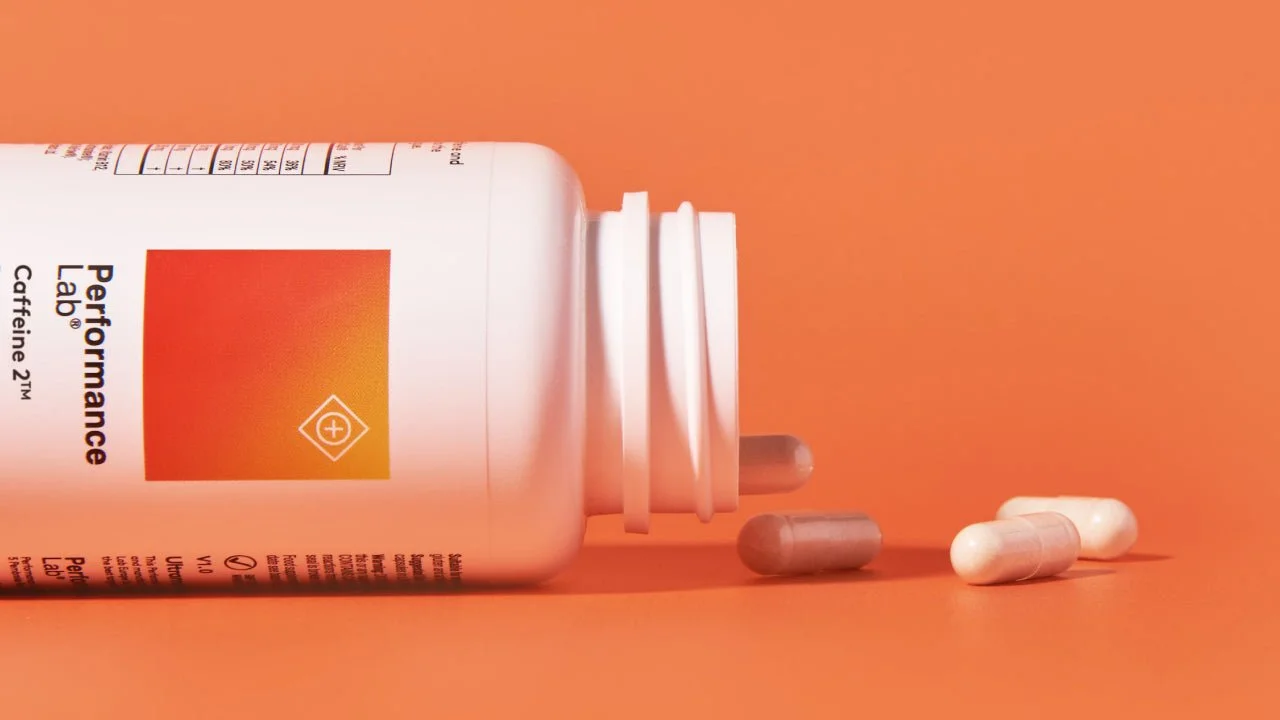
I love coffee. At one point I loved it enough to drink five black coffees a day, then act surprised when my stomach and sleep weren’t entirely delighted about it.
Performance Lab Caffeine 2 came into my life when I wanted less caffeine, not more. I wasn’t trying to become a laser-focused productivity machine. I wanted the useful part of caffeine without spending the whole day topping myself up from a mug.
I used Caffeine 2 for a month, usually taking one capsule before training and occasionally another while working later in the day. It helped me cut back on coffee, gave me a steadier lift and didn’t leave me with the same sharp rise and drop I’d become used to.
It isn’t magic, and caffeine is still doing most of the work. But the measured dose and supporting ingredients make Caffeine 2 more interesting than an ordinary caffeine tablet.
MY PERFORMANCE LAB CAFFEINE 2 VERDICT
Score: 8/10
Best for: People who want a smaller, precisely measured caffeine hit without another coffee or sugary energy drink.
Probably unnecessary for: Anyone who enjoys coffee, tolerates it well and already manages their intake sensibly.
Current price: $44 for 30 capsules when bought once. Checked October 2026.
How long I tested it: One month.
Use code EXTRA10 at checkout for 10% off
WHAT IS PERFORMANCE LAB CAFFEINE 2?
Performance Lab Caffeine 2 is a low-dose caffeine supplement made for energy, concentration and mental performance. Each capsule contains 50 mg of caffeine, which is somewhere around the amount you might get from a weak coffee, depending on the beans, serving size and how it was made.
The difference is precision. A coffee can contain far more or less caffeine than you think. With Caffeine 2, you know you’re getting 50 mg every time.
It combines that caffeine with 100 mg of L-theanine, 250 mg of L-tyrosine and modest amounts of four B vitamins. You get 30 vegan capsules in each bottle.
Performance Lab suggests taking one or two capsules, with a maximum of five across the day. I’d treat five as the ceiling, not something to aim for. Once you add coffee, tea, cola, energy drinks or pre-workout supplements, a supposedly low-caffeine day can become a very caffeinated one.
WHAT’S IN EACH CAPSULE?
Natural caffeine from Coffea robusta seeds: 50 mg
L-theanine: 100 mg
L-tyrosine: 250 mg
Vitamin B2: 500 mcg
Vitamin B6: 750 mcg
Folate: 170 mcg DFE
Vitamin B12: 2 mcg
The formula is vegan, gluten-free and free from the usual artificial colours and preservatives.
NATURAL CAFFEINE: 50 MG
Caffeine works. It can improve alertness, attention and several types of exercise performance. That isn’t controversial.
The clever part here is the amount. Fifty milligrams is enough for many people to feel more awake without launching themselves into orbit. It also makes the product easy to scale. One capsule might be enough for work. Two provide 100 mg if you want something more noticeable.
That said, the dose used in exercise research is often higher than 50 mg. If you’re buying Caffeine 2 purely to improve a hard workout, one capsule may feel fairly subtle. That could be exactly what you want, but it’s worth understanding what you’re paying for.
L-THEANINE: 100 MG
L-theanine is an amino acid found naturally in tea. It doesn’t stimulate you in the same way as caffeine. Its job in this formula is to make the caffeine feel calmer and more controlled.
The 2:1 ratio of L-theanine to caffeine makes sense. Research on the combination suggests it may help with aspects of attention, accuracy and task switching during the first couple of hours after taking it.
The results aren’t spectacular or universal, but this is the ingredient that separates Caffeine 2 from a cheap caffeine tablet. It may take some of the edge off the stimulation without removing the alertness you wanted in the first place.
L-TYROSINE: 250 MG
L-tyrosine is an amino acid your body uses to produce dopamine, adrenaline and noradrenaline. It has shown some potential for supporting cognitive performance when people are under acute stress, sleep-deprived or being asked to do several demanding things at once.
The evidence is mixed, and many of the positive studies have used amounts measured in grams rather than the 250 mg found here. I wouldn’t buy Caffeine 2 for the tyrosine alone, and I wouldn’t assume this amount transforms the formula.
It’s a potentially useful extra. Caffeine and L-theanine remain the main event.
THE B VITAMINS
Caffeine 2 includes vitamins B2, B6, B9 and B12. They all contribute to normal energy metabolism and nervous-system function, but they don’t provide an instant hit of energy.
Performance Lab suggests caffeine increases the loss or demand for certain nutrients and that the B vitamins help replace them. I think that claim gets ahead of the evidence. One coffee doesn’t suddenly drain your body of B vitamins, and adding them to a capsule doesn’t prove they prevent a caffeine crash.
The amounts are sensible rather than excessive. They’re fine to have, but they aren’t a strong reason to choose this product.
DOES THE FORMULA WORK?
Yes, with a rather important qualification. Caffeine works, and Caffeine 2 contains caffeine.
The formula’s advantage is that it gives you a modest, repeatable amount alongside L-theanine. That combination has enough evidence behind it to be credible, particularly for short-term attention and concentration.
What hasn’t been tested is Caffeine 2 as a finished product. There isn’t an independent clinical trial showing that this exact capsule eliminates jitters, burnout or crashes. Those claims are too confident because people respond to caffeine very differently.
If 50 mg normally makes you anxious or disrupts your sleep, adding L-theanine doesn’t guarantee that it won’t. If you’re used to drinking several strong coffees a day, one capsule may barely register.
MY EXPERIENCE WITH PERFORMANCE LAB CAFFEINE 2
Before trying Caffeine 2, I was drinking around five black coffees a day. I love coffee, but my stomach wasn’t thanking me for it, I wasn’t falling asleep as easily as I wanted and my energy could drop sharply later in the day.
For one month, I cut that down to one or two coffees before midday. I usually took one Caffeine 2 capsule before the gym at around 1 pm, then occasionally another at around 4 pm when I had several hours of computer work ahead of me.
I wasn’t measuring the caffeine in every coffee, so I’m not going to pretend my totals were laboratory accurate. What matters is that my overall intake came down considerably.
My stomach settled, I found it easier to fall asleep and my energy felt steadier across the day. My performance in the gym stayed much the same, but I didn’t feel the same drop towards the end of a workout that could follow one enormous pre-training coffee.
The improvement in focus was harder to judge because I was also taking a nootropic at the time. I’m not going to give Caffeine 2 credit for something I couldn’t separate from everything else.
It didn’t transform my life. It did exactly what I wanted it to do, which was help me drink less coffee without feeling flat. That was enough for me to keep using it.
IS CAFFEINE 2 BETTER THAN COFFEE?
Not automatically. Coffee is cheaper, enjoyable and comes with its own collection of naturally occurring compounds. I still drink it and have no intention of pretending a capsule can replace the pleasure of a decent cup.
Caffeine 2 wins on control and convenience. You know the dose, you can carry it anywhere and you don’t need to drink another large coffee when your stomach has already had enough.
If coffee works beautifully for you, save your money. If your coffee habit has become a conveyor belt running from breakfast until late afternoon, Caffeine 2 could help you become more deliberate about how much caffeine you’re having.
IS IT BETTER THAN AN ENERGY DRINK?
For me, yes.
Most energy drinks give you a fixed caffeine serving that can be considerably higher, often with a long list of sweeteners, flavourings and other ingredients you may not want. Caffeine 2 lets you start with 50 mg and decide whether you need more.
That doesn’t make energy drinks bad. Some people enjoy them and tolerate them perfectly well. Caffeine 2 is simply more controlled, easier to adjust and less likely to feel like somebody has turned the lights on inside your skull.
IS CAFFEINE 2 GOOD BEFORE A WORKOUT?
Caffeine can improve endurance, muscular endurance, movement speed and several other aspects of exercise performance. The response varies, but the overall evidence is strong.
The catch is the dose. Much of the sports-performance research uses around 3 to 6 mg of caffeine per kilogram of body weight. One 50 mg capsule is well below that range for most adults.
That doesn’t make it useless. I often prefer enough caffeine to feel switched on rather than so much that I can hear colours. One or two capsules may be plenty for an ordinary gym session, particularly if you’ve already had coffee.
If you want a complete pre-workout rather than measured caffeine, read my Pre Lab Pro review. It’s designed specifically for training and is a better fit for that job.
DOES IT HELP WITH FOCUS?
Caffeine can improve reaction time and attention, although more isn’t always better. Higher amounts may make you faster while also making you restless, distracted or less accurate.
Combining caffeine with L-theanine appears to improve some measures of attention and accuracy. The effects are generally modest, but they’re relevant if you want help getting through focused work without using a huge stimulant dose.
Caffeine 2 worked well for my afternoon computer sessions. I felt more awake and less inclined to wander off mentally, but I was also taking a nootropic. My experience supports the possibility. It doesn’t prove which ingredient was responsible.
If you want broader, stimulant-free cognitive support, my Mind Lab Pro review covers the product I’d consider instead.
HOW I’D TAKE IT
Performance Lab recommends taking one or two capsules on an empty stomach. Each capsule provides 50 mg of caffeine, and the company suggests a maximum of five capsules in 24 hours.
I’d start with one. Give it time, see how you respond and keep track of other sources of caffeine you’re consuming that day.
For training, I’d take it around 30 minutes beforehand. For work, I’d use it when I knew I had something demanding to get through, rather than taking it automatically every morning.
The later you take caffeine, the more likely it is to interfere with sleep. My occasional 4 pm capsule worked for me at the time because I had deliberately reduced the rest of my intake from other sources. It won’t suit everybody.
HOW MUCH CAFFEINE IS TOO MUCH?
For healthy adults, the European Food Safety Authority considers single servings of up to 200 mg and daily intake of up to 400 mg unlikely to raise safety concerns. That isn’t a target, and it doesn’t mean everyone will feel good at those amounts.
One Caffeine 2 capsule is 50 mg. Five capsules are 250 mg. Add two coffees and a caffeinated pre-workout, and you could move beyond 400 mg without paying much attention.
Sleep, anxiety, heart rate and digestion are usually better guides than bravado. If 100 mg leaves you wired or uncomfortable, your body has already given you the answer.
Pregnancy, certain medications and some heart or anxiety conditions change the conversation. In those situations, it’s sensible to check what’s appropriate for you rather than relying on a general number from a supplement review.
THE PRICE
A one-time purchase currently costs $44 for 30 capsules.
At one capsule a day, that works out at roughly $1.47 per serving. Take two every day and the bottle lasts 15 days, taking the cost to around $2.93 a day. Subscriptions and multi-bottle orders reduce that figure.
Compared with an ordinary caffeine tablet, it’s expensive. Compared with buying another coffee every afternoon, it may not feel unreasonable.
You’re paying for the measured dose, L-theanine, convenience, vegan capsule and Performance Lab’s manufacturing standards. Whether that’s worth $44 depends on which of those things you care about.
THE PROS
The 50 mg caffeine serving is easy to control.
The 2:1 L-theanine-to-caffeine ratio is evidence-led.
It gave me steadier energy while helping me cut back on coffee.
It’s useful for work or training without committing to a large stimulant dose.
Every ingredient and amount is disclosed.
The capsules are vegan and easy to carry.
It contains no sugar or proprietary blend.
Performance Lab offers a 30-day money-back guarantee.
THE CONS
It’s expensive for a product built mainly around caffeine.
One capsule may be too subtle for experienced caffeine users.
L-tyrosine is included at a much smaller amount than is commonly studied.
The B vitamins don’t prove the product prevents a caffeine crash.
The finished formula hasn’t been tested in an independent clinical trial.
It can still cause jitters, anxiety or poor sleep if you’re sensitive.
The bottle lasts only 15 days if you regularly take two capsules.
It’s available only through Performance Lab.
WHO SHOULD CONSIDER CAFFEINE 2?
Caffeine 2 makes the most sense if you want to reduce your coffee or energy-drink intake without giving up caffeine altogether. It also suits people who prefer a smaller, predictable serving they can adjust around work and training.
It may be worth considering if coffee upsets your stomach, you travel regularly or you want caffeine without sugar, liquid or another enormous drink.
WHO SHOULD SAVE THEIR MONEY?
If you love coffee, tolerate it well and can stop drinking it early enough to protect your sleep, you probably don’t need Caffeine 2.
It’s also the wrong product if you want a stimulant-free nootropic, a complete pre-workout or something powerful enough to compensate for consistently poor sleep. Caffeine can make you feel less tired. It can’t replace the sleep you missed.
MY FINAL VERDICT
Performance Lab Caffeine 2 is a well-designed caffeine supplement, but it’s still a caffeine supplement.
The formula makes sense. The 50 mg serving gives you control, the L-theanine is included at a sensible ratio and the product helped me cut back on coffee without losing the energy I wanted for training and work.
I don’t give it full marks because the tyrosine and B-vitamin story is less convincing, the finished formula hasn’t been independently tested and $44 is a premium price for 30 capsules.
For the right person, however, it does a useful job very well.
My score: 8/10.
Use code EXTRA10 at checkout for 10% off
RELATED REVIEWS
If your relationship with caffeine has moved from enjoyable to legally binding, Check It Oot is where I make sense of this stuff without pretending every supplement deserves a place in your cupboard. One email once or twice a month, written by me and delivered straight to your inbox.