Female body types
By Martin Ebner
Last updated August 2026
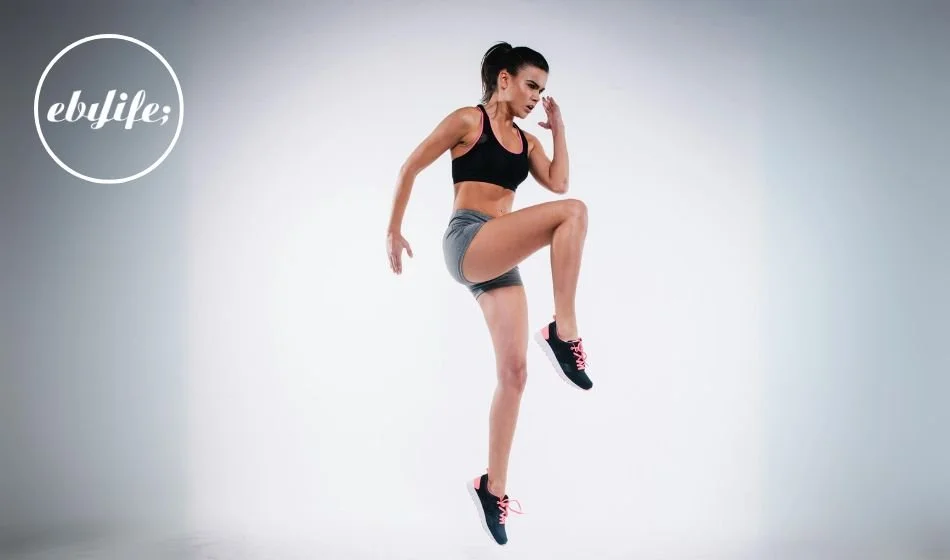
In fifteen years of coaching I’ve never once written a program by starting with someone's body shape.
You’ve probably just searched for yours, so let me give you what you came for. The eight shapes are below, along with how to tell which one is you. It’s worth a minute of your time.
Then I want to tell you the part the rest of the search results will not. Your shape is a description of your proportions. It’s not a set of instructions. There is no pear workout and there’s no apple diet, and the articles telling you otherwise are borrowing a system that came out of clothing, not from coaching.
What your shape decides is smaller than you’ve been led to believe. What you can do about it is much bigger.
WHERE THE EIGHT BODY SHAPES COME FROM
The eight body shapes weren’t developed by physiologists. They came from clothing.
Garment makers needed a shorthand for how fabric would hang on different frames, so they sorted bodies by the relationship between shoulders, waist and hips. It works well for that. A jacket cut for one set of proportions genuinely will hang differently on another.
Somewhere along the way, fitness borrowed the language. And a system built to describe how a dress sits started being used to prescribe how a woman should train and eat. That is where it stopped being useful and started being a limitation.
Knowing your shape is still worth something. It’s a decent way of seeing your own proportions clearly, and there’s something quietly settling about recognising that your figure is an ordinary, common shape and not a fault.
THE EIGHT FEMALE BODY SHAPES

A. STRAIGHT (RECTANGLE)
Shoulders, waist and hips sit close in width, with a waist that does not narrow much. Athletic looking frames often land here.
B. PEAR (TRIANGLE)
Hips are wider than the shoulders, with a defined waist. Weight tends to settle on the hips and thighs.
C. SPOON
Similar to a pear, with a more pronounced shelf at the hips and a little more softness through the middle.
D. HOURGLASS
Balanced shoulders, bust, and hips with a defined waist.
E. TOP HOURGLASS
Bust is larger than the hips with a defined waist.
F. INVERTED TRIANGLE
Broad shoulders with narrower hips.
G. OVAL (APPLE)
Full midsection with less defined waist.
H. DIAMOND
Wide shoulders and hips with a narrower waist.
If you cannot decide which one you are, that’s not a failure of self knowledge. Most women land somewhere between two of them, and plenty of women move from one to the next during their lifetime. That should tell you something about how fixed these categories really are.
WHAT YOUR SHAPE ACTUALLY TELLS YOU
Two things, honestly.
The first is your skeleton. The width of your shoulders and the width of your hips are bone. You inherited them and they aren’t going anywhere. There is a real freedom in accepting that rather than spending years fighting it.
The second is where your body prefers to store fat. That is largely genetics and hormones, and it’s the reason two women can eat and train the same way and still carry it in very different places.
That’s the whole list. Your shape is a description of your proportions. It’s not a verdict on your metabolism, your discipline, your potential, or what you’re capable of building.

WHAT IT DOESN’T TELL YOU
It doesn't tell you how you should train. The idea that a woman with wide hips needs a fundamentally different program from a woman with narrow ones doesn't hold up once you're actually standing in front of both of them. The movements that build a strong body are always the same. What changes is the loading, the range, and what your body is happy doing on the day, and none of that is predicted by your silhouette.
It doesn’t tell you where you’ll lose fat first. You can't really choose. The research on targeting one area has gone back and forth for decades and the honest summary is that any effect is small enough not to plan around. A hundred inner thigh exercises won't change your hips. Fat comes off in the order your body decides, and that order tends to follow the same genetics that put it there.
And it does not tell you what you can build. This is the one that matters most. Muscle is the one part of your shape you have real say over, and everyone has the potential to build more. Where you carry fat is largely inherited. What you build on top of your figure is not.
WHAT ACTUALLY CHANGES HOW YOU LOOK AND FEEL
STRENGTH TRAINING
Not because of how effectively it burns calories, but because of what it adds. Muscle changes proportion in a way nothing else does. It gives shoulders a line, it gives glutes shape, it holds a waist. Two women with identical skeletons and identical body fat can look entirely different depending on what they’ve built, and building it is available to every single one of them. Strong is sexy, and I say that as someone who’s watched it change how women stand in a room, not just how they look in a photo.
PROTEIN
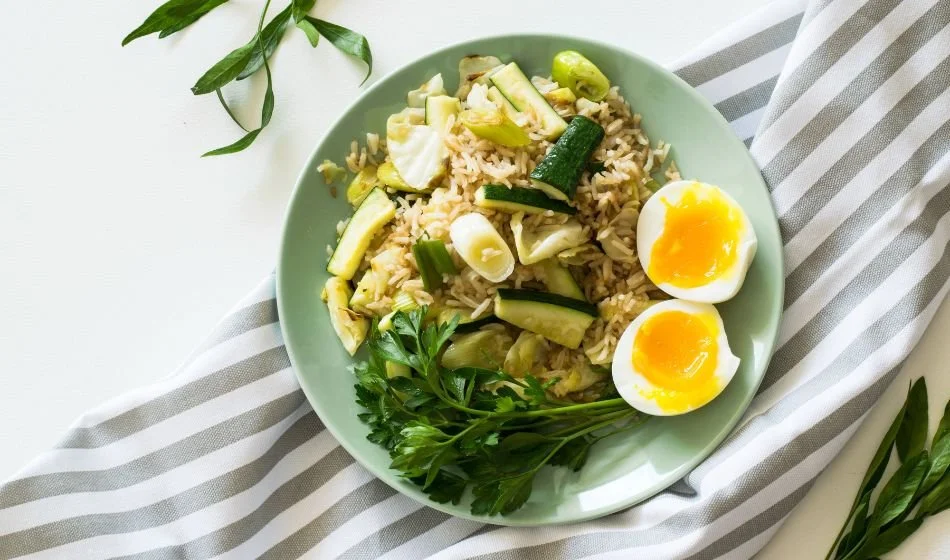
Likely more than you're eating. For anyone strength training I'd usually suggest somewhere around two grams per kilo of bodyweight a day, spread across the day rather than piled into one meal. It builds what you're training for, and it keeps your energy steady in between. Snacking isn't the problem here, by the way. I encourage it. Arriving at dinner absolutely ravenous is the problem, and that's usually a protein question rather than a willpower one.
CONSISTENCY OVER INTENSITY
Two good sessions a week that you actually do will always beat four you plan and abandon. I start almost everyone on two. More can sound achievable in week one but tends to fall apart by week four. Start with less and build up.
TIME
I’ve been training for over twenty five years. When someone compares themselves to a body that took decades, they’re not comparing fairly. You’re building from where you are, and that is the only honest place to build from. Poco a poco.
None of that changes with your shape. It’s the same for the pear and the hourglass and the woman who can’t work out which she is. What changes is the person, not the silhouette.
A WORD ON THE SCALE
If you take up strength training, the number may go up for a while. Your body holds water to repair the new demands places on it, and you’ll be adding a little muscle at the same time. That isn’t going backwards, it’s the process working, though I understand it doesn’t feel that way at the time.
I would rather you noticed how your clothes fit, how you feel getting out of bed, how much stronger you’re getting, and how you look in a photo taken in the same light a couple of months apart. Those are the honest measures. The scale is a single number that doesn’t know the difference between muscle, water and fat, and it’s given far more say than it deserves.
WHAT I WOULD ACTUALLY LOOK AT, IF YOU TRAINED WITH ME
I wouldn't start with your shape. I'd start with what you can already do, what you enjoy, what your week genuinely allows, and any niggles you're carrying.
Then we would train mostly between seven and twelve reps, slowly and with control, because quality of movement is what builds muscle and rushing through a set builds far less. If an exercise doesn’t suit your body, and some won’t, we swap it. For every exercise that isn’t right, there are five that are. I have cervical osteoarthritis and a lower back that has opinions, so I can’t deadlift or front squat, but it’s never once held my own training back. I simply adapt.
None of that came from a chart, and none of it started with your shape. Read the person in front of you, not the category they arrived in. If there's one rule that covers all eight shapes, that's it.

THE BIT WORTH KEEPING
Your shape is where you started. It’s bone and genetics and a bit of luck, and it’s not a comment on you.
What you build on it is yours. That part was never decided by a diagram.
If you've read this and found yourself somewhere between two shapes, or none of them, you're in very good company. It matters a lot less than the internet would like you to think.
And if you ever do train with me, I still won't ask.
If you want more of this, I write a wee newsletter called Check It Oot. Sign up to get it straight to your inbox, twice a month.