10 signs of a great workout: what really matters
Written by Martin Ebner, updated September 2026.
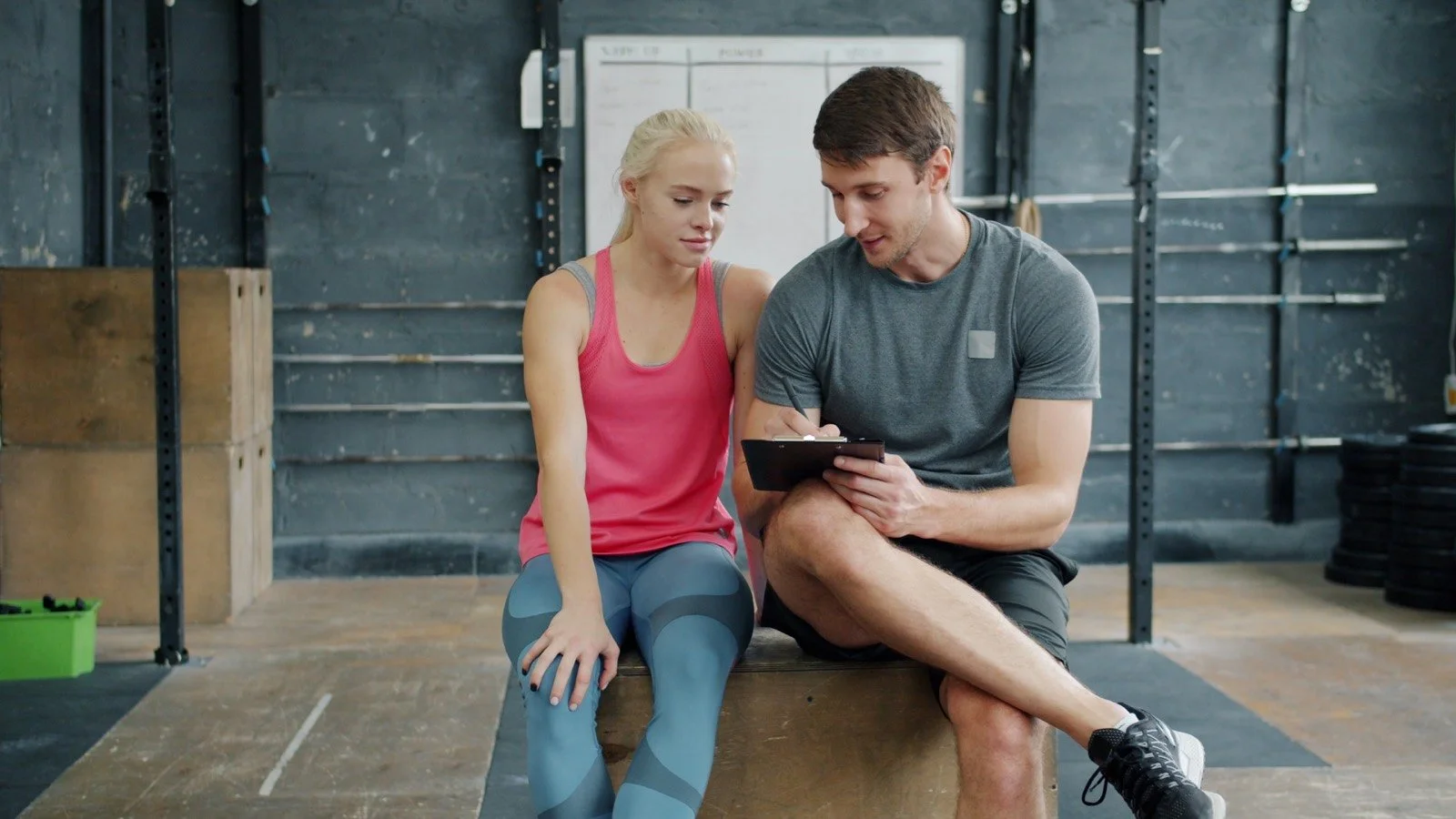
People use all sorts of things to judge a workout. How much they sweated, how sore they felt, how many calories their watch says they burned, or whether they could still walk down the stairs afterwards. None of those proves the session was any good.
A hard workout can be productive, but hard isn’t the goal. A great workout gives you the right amount of work for what you’re trying to achieve, then allows you to recover and do it again.
You can’t judge an entire training program from one session. Results show up over weeks and months, not during the walk back to the changing room. Even so, these ten signs will tell you whether a workout has done its job.
1. THE SESSION HAD A CLEAR PURPOSE
Strength, muscle growth, cardiovascular fitness and recovery sessions shouldn’t all look or feel the same.
If the goal was to practise a lift, a session built around controlled reps and longer rests may be far more useful than a breathless circuit. If the goal was conditioning, keeping the pace up may matter more. A lighter session can also be exactly right when it supports the harder training around it.
A great workout starts with knowing what you’re asking it to achieve.
2. THE EFFORT MATCHED THE GOAL
Most working sets should feel challenging by the end, but that doesn’t mean every set needs to finish at absolute failure. Research comparing failure and non-failure training found that reaching failure isn’t required to build strength or muscle.
For resistance training, finishing many working sets with roughly one to three good repetitions left is often a sensible place to be. Some sets can go closer, particularly on safer isolation exercises, but there’s no prize for turning every exercise into a survival test.
RPE and repetitions in reserve aren’t perfect, especially when you’re new to them, but research supports perceived-effort scales as useful tools for judging and tracking training intensity.
3. YOUR TECHNIQUE STAYED HONEST
Your technique doesn’t need to look identical to anyone else’s. Bodies, proportions and training experience differ, so there’s rarely one perfect version of an exercise for everyone.
Your reps should still remain controlled and recognisable. If the weight only moves because you’ve shortened the range, bounced it, twisted around it or turned the final few reps into a completely different exercise, the set has probably gone far enough.
Quality over quantity, always.
4. YOU RESTED LONG ENOUGH TO PERFORM
Rest isn’t wasted time. It’s what allows you to produce another useful set.
Heavy compound exercises generally need more recovery than smaller isolation movements. Shortening every rest period may make the session feel harder, but it can also reduce the amount of quality work you’re able to complete.
I’ve covered the practical numbers in my guide to rest times between sets. The simple rule is to rest long enough for your next set to be worth doing.
5. YOU COMPLETED THE WORK THAT MATTERED
A program is a guide, not an oath. You don’t need to force every planned repetition when your body is clearly telling you to adjust.
The important thing is that the main work was completed well. If you trained the intended movements, achieved the useful sets and kept the quality where it needed to be, the session did its job.
Adding another twenty minutes because you’re still standing doesn’t automatically improve it.
6. YOU CREATED SOMETHING TO BUILD ON
Progress doesn’t always mean adding more weight. It could mean performing another repetition with the same load, using better control, improving your range of motion or completing the same work with less effort.
Record enough to know what happened. You don’t need a spreadsheet containing the air temperature and the position of the moon, but you should know your exercises, loads, sets and repetitions.
That gives you something useful to compare next time. My guide to progressive overload explains how to move forwards without trying to force a personal best every session.
7. YOU FINISHED WITHOUT SHARP OR UNUSUAL PAIN
Working muscles can feel uncomfortable. A hard set may burn, your breathing may be heavy and you’ll probably be keen to put the weight down.
Sharp pain in a joint or a movement that simply feels wrong is different. That isn’t proof that the exercise is working, and it isn’t something you need to push through.
Adjust the load, change the movement or stop and have the issue assessed if it persists. For every exercise that isn’t right for you, there are five others we can use instead.
8. YOU DIDN’T NEED SORENESS OR SWEAT TO PROVE IT WORKED
Muscle soreness usually tells you that you’ve done something unfamiliar. It doesn’t reliably tell you how much muscle you’re going to build, and muscle damage isn’t what drives long-term muscle growth.
Sweat isn’t a workout score either. It’s influenced by temperature, humidity, clothing and how much you naturally perspire. The calorie estimate on a watch or cardio machine isn’t a grade for the session.
You can have an excellent workout without crawling home or struggling to sit on the toilet the following morning.
9. YOU RECOVERED IN TIME FOR THE NEXT SESSION
Some fatigue after training is completely normal. What matters is whether the amount of work fits the recovery time available.
Sleep, appetite, mood and performance across the week provide far more useful information than how you feel immediately after one session. One sluggish day isn’t a crisis, but a repeated drop in performance usually means something needs adjusting.
Recovery also starts before the workout. Sleep loss can reduce physical performance, so no clever training method can completely rescue a program built on poor sleep.
10. YOU CAN SEE YOURSELF DOING IT AGAIN
Not every exercise needs to be your favourite, and not every session will be the highlight of your week. The overall approach should still be something you can live with.
The point of one workout is to support the next one. If you can train hard, recover and return ready to move forwards, you’re doing far more right than someone who empties the tank once and disappears for a week.
If you’re just getting started, my beginner’s guide to weight training will help you turn those individual sessions into a proper program.
A GREAT WORKOUT EARNS THE NEXT ONE
A great workout doesn’t need to leave you wrecked. It needs a clear purpose, appropriate effort, honest technique and enough quality work to move you forwards.
Judge your training by what it produces over time. Better strength, better fitness, more confidence and a body that can keep doing what you ask of it. That matters far more than sweat on the floor or soreness the following morning.
If you’re more interested in training that works than looking destroyed for Instagram, Check It Oot is probably your sort of newsletter. I send it once or twice a month, when I’ve got something worth saying.