Written by Martin Ebner
Last updated October 2026
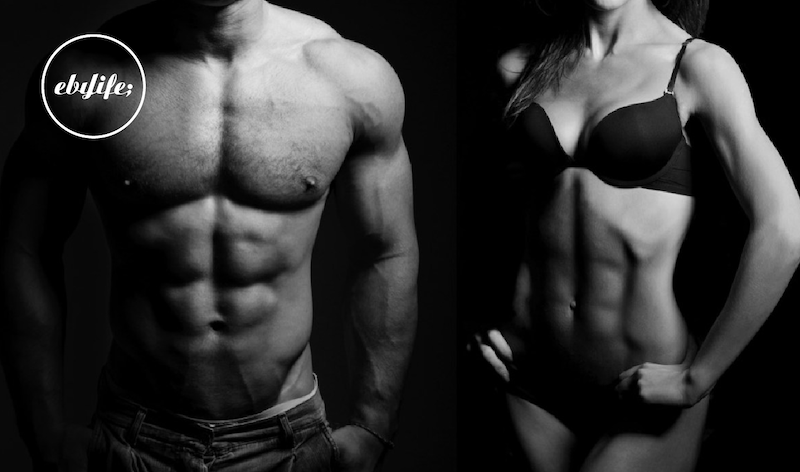
Getting visible abs is simple in theory and much harder in practice. You need to build them, then get your body fat low enough for people to see them.
Diet does most of the revealing. Compound exercises build the foundation. Direct ab work gives them the extra thickness and detail that make them pop.
You already have abs. If you didn’t, getting out of bed would be difficult, never mind squatting, running or carrying the shopping. The real question is how much work you’re willing to put into building them, and how lean you’re willing to become to show them off.
A six-pack can look brilliant. It isn’t proof of perfect health, superior discipline or access to a better brand of chicken breast.
YOU CAN’T OUT-CRUNCH BODY FAT
You can make your abs strong enough to crack walnuts, but they won’t be visible if there’s enough fat covering them.
Losing that fat requires a calorie deficit, which means eating fewer calories than you use over time. Ab exercises can strengthen and build the muscles underneath, but they aren’t a reliable way to burn the fat sitting directly above them.
There’s slightly more nuance here than the standard “spot reduction is impossible” line suggests. A small 2023 trial found greater trunk fat loss when 16 men combined treadmill running with a large amount of ab work.
They were training for close to an hour, four days a week. This isn’t evidence that ten crunches before bed will uncover your abs.
Treat fat loss as a whole-body job. Where the fat disappears first, and where it stubbornly hangs around, is largely outside your control.
My guide to strength training for weight loss explains why lifting should remain part of the plan while your body fat comes down.
GENETICS DECIDE WHAT YOUR ABS LOOK LIKE
The shape of your abs is genetic. The lines that divide them help determine whether you display something resembling a four-pack, six-pack or eight-pack.
They may be symmetrical, slightly offset or completely unwilling to resemble the fitness model whose photograph you saved for inspiration. No exercise can rearrange them.
Genetics also influence where you store fat. Many men hold it around the lower stomach, while women generally carry more essential body fat and may find that getting extremely lean comes with a much higher physical cost.
You can build the abs you’ve got and reduce the fat covering them. You can’t order somebody else’s.
This is the same principle I explain in Genetics and fitness: how to train for your body type. Genetics affect your starting point and the final shape. They don’t remove your ability to make progress.
DIET DOES MOST OF THE REVEALING
“Abs are made in the kitchen” isn’t completely true because the muscles still need training, but the kitchen decides whether anybody gets to see them.
A review of diets and body composition concluded that fat loss is driven by maintaining a calorie deficit. Whether you prefer three meals, six meals, intermittent fasting, more carbohydrates or fewer carbohydrates matters less than whether your diet creates that deficit and remains manageable.
You don’t need to ban bread, pasta, fruit, dairy or every meal that makes life enjoyable. You need mostly nutritious food, sensible portions and enough consistency for your weekly intake to support the goal.
My own rule is simple: fuel first, pleasure second. Build most meals around protein, vegetables or fruit, a sensible carbohydrate source and enough fat to make the food worth eating. Leave room for the things you enjoy instead of pretending you’ll never look at pizza again.
USE A DEFICIT YOU CAN STILL TRAIN ON
The leaner you become, the less sense it makes to attack the diet aggressively. A large deficit may move the scales more quickly, but it can also make training worse, increase hunger and encourage the loss of muscle alongside the fat.
A meta-analysis of resistance training during calorie restriction found that prolonged calorie deficits made it harder to gain lean mass. Larger deficits were particularly unhelpful when the goal was to retain or build muscle.
You don’t need to calculate the perfect number on day one. Track your average weight for two or three weeks, look at what’s happening and make one sensible adjustment. If your weight is gradually falling and your training remains productive, leave it alone.
As you become leaner, progress will usually slow down. The last bit of definition tends to demand far more patience than the first few kilos of weight loss.
KEEP PROTEIN HIGH ENOUGH
Protein helps you hold onto muscle while losing weight, supports recovery and makes a calorie-controlled diet easier to live with.
For somebody who trains regularly, around 1.6 to 2.2g of protein per kilogram of body weight each day is a sensible working range. You don’t have to hit exactly the same number every morning.
Split it across a few meals and choose foods you’ll continue eating. Meat, fish, eggs, dairy, tofu, tempeh, beans, lentils and protein powder can all contribute.
My complete guide to protein intake for different fitness goals covers the details without turning lunch into an accountancy exam.
COMPOUND LIFTS BUILD THE FOUNDATION
Squats, deadlifts, split squats, loaded carries, presses, rows and pull-ups all force your abs to work hard. Performed properly, they build a strong body with a midsection capable of doing more than posing for a photograph.
This is where I’d start. Build strength through full-body training, improve the main lifts gradually and give your abs a reason to become stronger alongside everything else.
Compound exercises aren’t a complete replacement for direct ab work if appearance is the specific goal. They make your abs brace and stabilise your body, but they don’t always take them through the range of movement needed to build as much muscle as possible.
Think of compound training as the foundation. Direct work finishes the job.
DIRECT AB WORK MAKES THEM POP
Your abs are muscles, and muscles respond to progressive resistance. Endless unweighted crunches may create a burning sensation, but that doesn’t mean much if you keep doing the same number forever.
Train your abs two or three times a week. Choose exercises you can control, gradually increase the repetitions or resistance and stop the set when your technique begins to disappear.
A recent American College of Sports Medicine review confirmed that progressive resistance training builds muscle through a range of sensible approaches. Your abs aren’t special. If you want them to grow, train them like any other muscle.
A good selection might include:
Cable crunches
Hanging knee or leg raises
Reverse crunches
Ab-wheel rollouts
Pallof presses
Side planks
Suitcase carries
You don’t need to perform all of them in every session. Two or three exercises done properly will achieve far more than rushing through twenty variations.
A SIMPLE ABS PROGRAM
Add this after your main strength work twice a week.
Session one
Cable crunch: 3 sets of 8 to 12 repetitions
Hanging knee raise: 3 sets of 8 to 12 repetitions
Side plank: 3 sets of 30 to 45 seconds on each side
Session two
Ab-wheel rollout: 3 sets of 6 to 10 repetitions
Reverse crunch: 3 sets of 10 to 15 repetitions
Suitcase carry: 3 controlled walks on each side
Start with a range of movement you can control. Make your abs do the work instead of throwing your entire body through each repetition.
When you reach the top of the repetition range with good technique, add a little resistance or make the movement harder. That’s progressive overload, not punishment.
You can read more about it in Progressive overload: what it is and how to use it.
CARDIO IS THE SUPPORTING CAST
Cardio can increase how many calories you use, improve your fitness and give you a little more room in your diet. It doesn’t need to become the centre of your life.
Walking is underrated because it isn’t dramatic. It’s easy to recover from, doesn’t interfere much with strength training and can be repeated regularly without requiring a dark room afterwards.
Cycling, swimming and running are all fine if you enjoy them. You don’t need fasted cardio, and you certainly don’t need frantic HIIT sessions because somebody promised they would melt the fat covering your lower abs.
Choose something you’ll continue doing. Use it to support your diet rather than trying to compensate for one that has gone completely rogue.
SUPPLEMENTS AREN’T THE MISSING PIECE
Protein powder can make your protein target easier to reach. Creatine can support strength and training performance. Caffeine may help you feel more alert before a session.
None of them reveal your abs.
Fat burners can’t choose where fat comes from, and a multivitamin can’t protect a poor diet from its consequences. Supplements belong on top of sensible food and training, not underneath them.
If the diet, strength work and consistency aren’t in place, another capsule is rarely the answer.
DON’T GET LEANER THAN YOUR LIFE CAN SUPPORT
Visible abs aren’t always compatible with feeling your best. I’ve been at my leanest when I was tired, hungry, stressed and weaker than I wanted to be. The photograph looked good. The experience was less impressive.
Spending too long without eating enough can affect hormones, bone health, recovery, mood and performance in both women and men. The International Olympic Committee’s REDs consensus explains what can happen when somebody repeatedly trains without giving their body enough energy.
If your menstrual cycle changes, your libido disappears, your sleep deteriorates, you feel constantly cold or your training falls apart, becoming leaner isn’t the priority. Those are reasons to eat more and, where appropriate, speak to a qualified healthcare professional.
There’s no body fat percentage at which everybody’s abs appear. There’s also no percentage you must reach to prove you’re fit.
THE PLAN IN ONE PARAGRAPH
Train your whole body consistently. Make compound lifts the foundation, train your abs directly twice a week and improve those exercises over time. Eat enough protein, use a manageable calorie deficit and add cardio or walking where it helps.
Judge progress over months, not after three virtuous days and one restaurant meal. Once you’re lean enough, the abs you’ve spent time building will start to show.
Whether maintaining that level of leanness is worth it is a separate decision. You’re allowed to enjoy having visible abs, and you’re equally allowed to prefer feeling stronger, eating more and living without inspecting your stomach every morning.
If you’ve ever wondered whether the missing ingredient in your six-pack plan is fasted cardio, a fat burner or a life without pizza, Check It Oot is where I sort useful fitness advice from the stuff designed to keep you clicking. One email once or twice a month, written by me, straight to your inbox.