Breakfast: is it really the most important meal of the day?
Written by: Martin Ebner,
Last updated October 2026

I love breakfast. Before I’ve even properly opened my eyes, I’m in the kitchen chowing down on overnight oats. There are worse ways to wake up.
I usually alternate between two breakfasts. One is protein-packed overnight oats, the other is porridge. I change the ingredients when I fancy something different, but I’m essentially finding new ways to eat oats, cinnamon and peanut butter, and I’m perfectly happy with that.
That doesn’t make breakfast compulsory. It won’t switch on your metabolism, eating it doesn’t guarantee weight loss and skipping it doesn’t mean you’ve failed at health. Breakfast is simply a meal. What matters is whether it suits your appetite, your training and the rest of your day.
BREAKFAST DOESN’T SWITCH ON YOUR METABOLISM
Breakfast has been called the most important meal of the day for so long that it’s become one of those things people repeat without really questioning it. Your metabolism doesn’t shut down overnight and wait for a slice of toast to bring it back to life.
A systematic review of randomised trials found no clear difference in body weight, body fat or waist measurements between people told to eat breakfast and those told to skip it. Eating breakfast isn’t automatically better for weight loss, and skipping it isn’t automatically better either.
If you love breakfast, eat it. If you’re never hungry in the morning, you don’t need to force down a meal because a cereal advert told you to. The useful question isn’t whether breakfast is essential. It’s whether eating it helps you eat well, train properly and feel good during the day.
WHY I STILL THINK BREAKFAST CAN BE BRILLIANT
Breakfast gives me an early serving of protein, carbohydrates and fibre. It keeps my eating fairly predictable and means I’m not arriving at lunchtime ready to consume everything that isn’t nailed down.
That won’t be true for everybody. Some people feel better after eating in the morning, while others prefer to wait a few hours. What I usually find is that breakfast works best when it makes the rest of your day easier. If it leaves you satisfied, energised and less likely to grab something hopeless later, it’s doing a useful job.
It’s also an opportunity to eat foods you might otherwise struggle to fit in. Oats, fruit, yoghurt, eggs, nuts and wholegrain bread can all contribute something worthwhile. Breakfast doesn’t need to contain all of them, and it certainly doesn’t need to become a morning nutrition exam.
BUILD IT AROUND PROTEIN, CARBS AND SOMETHING YOU ENJOY
I’d usually begin with protein. Adding a meaningful serving at breakfast makes it easier to reach your total for the day and spreads your intake across more than one or two enormous meals. Research on daily protein distribution supports eating useful amounts across several meals rather than saving almost everything for dinner.
That protein might come from eggs, Greek yoghurt, milk, protein powder, cottage cheese or whatever else works for you. There’s no prize for making breakfast more complicated than it needs to be.
Carbohydrates provide energy, particularly if you’re active or training that morning. Oats, fruit and wholegrain bread also bring fibre, which can help make the meal more satisfying. Fat isn’t something to fear either. Peanut butter, nuts, seeds, avocado and egg yolks can all make breakfast taste better and keep it interesting.
The portions depend on your appetite, your goals and what you’ll be doing afterwards. Someone heading into a hard training session may want more fuel than somebody sitting at a desk all morning. That’s normal. Your breakfast should fit your day, not somebody else’s meal plan.
WHY OATS KEEP WINNING
I keep returning to oats because they’re cheap, easy, versatile and genuinely filling. Their soluble fibre, beta-glucan, may contribute to that fullness, although even the research shows that appetite is more complicated than one ingredient. A review of oats and satiety found that most of the evidence was positive, but the effects weren’t identical in every study.
More importantly, oats take very little effort and will accept almost anything you throw at them. Fruit, cocoa, cinnamon, protein powder, nuts, seeds and peanut butter all work. You can change the flavour without having to reinvent breakfast every morning.
MY PROTEIN-PACKED OVERNIGHT OATS
This is the breakfast I’m usually preparing while my eyes are still negotiating whether they’re ready to open.
I use:
Oats
Cinnamon
Banana
Protein powder
Peanut powder
Maca
A sprinkle of sea salt
Brewed chai tea for the liquid
Mix the dry ingredients, add the banana and pour in enough cooled chai tea to give you the consistency you like. Stir it properly, leave it in the fridge overnight and breakfast is waiting when you wake up.
The amounts are yours to adjust. Use more oats when you need more fuel and less when you don’t. I alternate the fruit and flavours when I fancy something different, but the basic idea stays the same.
The maca is optional. I like it in there, but breakfast won’t collapse without it.
MY PORRIDGE
When I want something hot, I make porridge with oats, protein powder, cinnamon, cocoa and water, then top it with peanut butter and maple syrup.
Cook the oats, cinnamon and cocoa with water until you have the texture you want. Take it off the heat, stir in the protein powder, then add the peanut butter and maple syrup.
Yes, maple syrup is sugar. That doesn’t turn a useful breakfast into a dietary disaster. The amount matters, and sugar can sit perfectly comfortably within a balanced diet. I’ve covered that in more detail in Is sugar bad for you?
The peanut butter adds richness, the maple syrup makes the whole thing considerably more enjoyable and the combination keeps me coming back to it. A breakfast you genuinely like is far more useful than a supposedly perfect one you abandon after three days.
BREAKFAST FOOD IS JUST FOOD
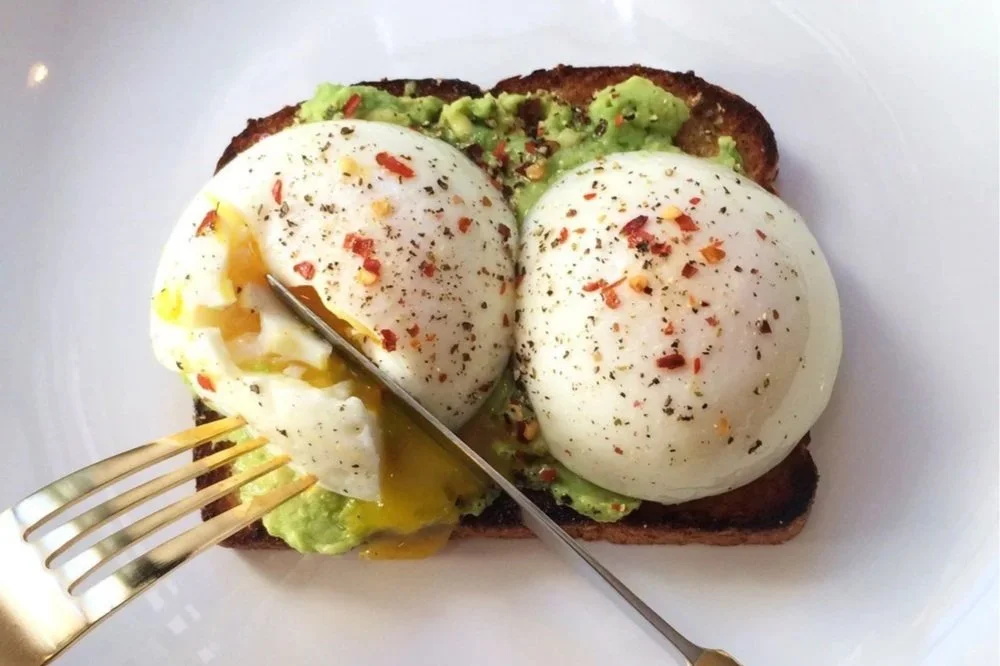
You don’t need to eat oats. Eggs on wholegrain toast, Greek yoghurt with fruit and nuts, cottage cheese, a smoothie with enough substance to count as a meal or yesterday’s leftovers can all work.
There’s no nutritional law saying eggs belong in the morning and chicken belongs in the evening. If you fancy rice, vegetables and a piece of salmon at eight o’clock, eat them. The clock doesn’t change what the food contains.
What matters is whether the meal gives you something useful and leaves you feeling ready for the day. A pastry and a coffee can still be breakfast if that’s what you fancy, but it probably won’t keep most people satisfied for very long. That doesn’t make it forbidden. It simply means you may need something else alongside it or a proper meal later.
WHAT IF YOU TRAIN IN THE MORNING?
If eating before training makes you feel stronger and more focused, eat first. If a large bowl of porridge feels like it’s bouncing around during squats, have something smaller or give yourself more time to digest it.
A banana, toast, a small portion of oats or a protein shake can be enough when you don’t want a full meal. Harder or longer sessions may benefit from more fuel, while plenty of people manage shorter sessions perfectly well without eating first.
Training fasted is also fine if you feel good and your performance doesn’t suffer. It isn’t automatically superior for fat loss, just as eating first isn’t automatically better for everybody. My guide to optimising intermittent fasting for fat burning explains where fasting can fit without turning it into another set of rules.
Pay attention to how you actually perform. If you regularly feel flat, hungry or distracted, eating something is worth trying. If you train well without it, there’s no urgent problem to solve.
BREAKFAST AND WEIGHT LOSS
Breakfast can support weight loss, but it doesn’t cause it. It may help if it keeps your appetite steady, gives you an early serving of protein and stops the rest of the morning turning into an unplanned tour of the snack cupboard.
It may be less useful if you aren’t hungry and eating it simply adds another meal to your day. Some people find that delaying their first meal makes controlling their overall intake easier. Others become so hungry that the plan unravels by lunchtime.
Neither approach is morally superior. Choose the pattern you can maintain while eating enough protein, fibre, fruit, vegetables and total food to support your health and training. That’s far more important than the exact time you first pick up a spoon.
EAT BREAKFAST BECAUSE IT WORKS FOR YOU
I’ll continue eating breakfast because I love it. My overnight oats and porridge are enjoyable, reliable and make hitting my protein and energy needs easier. That’s enough reason for me.
You might feel exactly the same, or you might prefer your first meal at midday. Both can work. Breakfast doesn’t need to be the most important meal of the day. It only needs to earn its place in yours.
If you’ve ever wondered whether breakfast is essential, fasting is superior or your porridge needs its own supplement stack, Check It Oot is where I sort useful nutrition advice from the rules we’ve inherited and stopped questioning. One email once or twice a month, written by me, straight to your inbox.