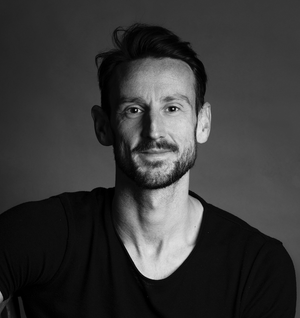
Written by Martin Ebner
Updated Sept 2026

Most gym etiquette comes down to one question. Are you making your workout someone else’s problem?
The gym is a shared space. You can train hard, grunt, sweat, film a set and take your time between heavy lifts without behaving as though everyone else is an unpaid extra in your fitness documentary.
I’ve trained in gyms around the world for more than 25 years. The equipment changes, the music changes and the changing rooms range from lovely to genuinely concerning, but the people who make a gym better tend to follow the same rules.
CLEAN WHAT YOU SWEAT ON
Nobody expects you to finish a hard set looking freshly powdered. Sweat is part of training. Leaving a damp outline of your entire body on the bench is optional.
Take a towel, use it and wipe down anything you’ve left visibly wet. If the gym provides cleaning spray, even better. You don’t need to disinfect a dumbbell after every curl, but nobody should have to lie in the evidence of your previous set.
PUT IT BACK AND DON’T DESTROY IT
If you’re strong enough to load it, you’re strong enough to unload it. This remains one of the few fitness principles I’ll defend without any nuance.
Put dumbbells back in the correct place, remove your plates and leave the machine ready for the next person. Control the weight as well. Heavy deadlifts make noise and that’s normal. Letting a light machine stack crash after every repetition is theatre, and expensive theatre at that.
DON’T CLAIM HALF THE GYM
Supersets are perfectly reasonable when the gym is quiet. At six in the evening, trying to reserve a bench, two cable stations and three pairs of dumbbells is less of a workout and more of a small property empire.
Use one or two stations, stay aware of how busy the room is and be prepared to adapt. Your program matters, but it doesn’t give you ownership of every piece of equipment it mentions.
LET PEOPLE WORK IN WHEN IT MAKES SENSE
If someone asks to use the same machine during your rest period and the setup is easy to change, letting them work in is usually the decent thing to do. You lose nothing and both of you get on with your training.
It won’t always be practical. A heavily loaded barbell, very different seat settings or a set that needs your full concentration can make sharing a nuisance. You can politely say no. Sharing is a courtesy, not a legal requirement.
WAIT UNTIL THE SET IS FINISHED
If somebody is halfway through a set, don’t ask how many sets they have left. Don’t wave in front of them, start moving their bottle or launch into a question about their training. Whatever you need to ask can survive another twenty seconds.
Wait until they’ve finished, make eye contact and ask normally. Most people are perfectly friendly when they’re not trying to stop a barbell landing on them.
REST, BUT DON’T TAKE UP RESIDENCE
Proper strength training sometimes requires several minutes between sets. Someone sitting on a bench isn’t necessarily wasting time, and hovering over them with a stopwatch won’t make the equipment available any faster. I’ve covered how long to rest between sets separately, including why longer rests can improve the work that follows.
There is a difference between recovering and disappearing into your phone for fifteen minutes. If you’ve stopped training, let someone else use the station. Instagram will still be there when you’re finished.
HEADPHONES EXIST FOR A REASON
Your playlist might be excellent. It might also be absolutely dreadful. Either way, nobody else asked for it.
Use headphones rather than playing music through your phone speaker. Gym owners aren’t exempt either. If the house music is so loud that people can’t hear their own headphones or speak without shouting, it’s too loud.
KEEP CALLS AND NOISE UNDER CONTROL
If you need to take a call, move away from the training floor or keep it brief and quiet. Pacing between the treadmills while conducting a business meeting at full volume is a workout for everyone else’s patience.
Making noise during a difficult lift is normal. Performing every repetition as though you’re announcing a maritime emergency is something else. Train hard, but remember that the person beside you didn’t buy a ticket to the performance.
FILM YOURSELF, NOT EVERYONE ELSE
Filming a set can be useful for checking technique, and taking a gym photo is hardly a crime. Just remember that your camera doesn’t turn a public training space into your private studio.
Keep tripods out of walkways, avoid capturing strangers where possible and don’t get annoyed when somebody walks through the shot. They’re using the gym for its original purpose. If the perfect angle matters that much, come at a quieter time.
WEAR WHATEVER YOU WANT, WITHIN REASON
I’m not the gym fashion police. If somebody wants to train in a baggy T-shirt, show some mad cleavage or wear leggings that make their bum look like a feat of engineering, good for them. Wear whatever makes you feel comfortable and confident.
What I don’t understand is the double standard. A woman can be told that her sports bra is inappropriate while a man wanders around topless as though his nipples have diplomatic immunity. Male nipples freak me out a bit, to be honest. Put them away, gentlemen.
Clean clothes and deodorant also go a long way. Old gym kit has a remarkable memory. If nature intervenes halfway through a heavy squat, I understand, but moving towards a quieter corner before the encore would be a lovely gesture.
GIVE PEOPLE SOME SPACE
Don’t stare, comment on somebody’s body or offer unsolicited coaching because you watched three videos about deadlifts. If somebody is doing something genuinely dangerous, alert a member of staff. Otherwise, allow them to train.
Personal space matters too. Leave enough room around anyone lifting a barbell or moving heavy dumbbells. Walking directly behind someone during a set of lateral raises is an unnecessarily exciting way to learn that lesson.
BE KIND TO BEGINNERS
Nobody arrived knowing which way to face on a hack squat. New gym members might take longer to adjust a machine, look uncertain or misunderstand an unwritten rule. Give them a moment.
If somebody asks for help and you know the answer, help them without turning it into a lecture. If you don’t know, point them towards a member of staff. A good gym should make people want to return, not make them feel stupid for being new.
LEAVE THE GYM BETTER THAN YOU FOUND IT
You don’t need to be silent, invisible or apologetic. Train properly, enjoy yourself and bring some personality with you. Just remember that everyone else paid to be there too.
Put things back, share when it’s sensible, give people room and don’t make your workout their problem. That covers almost all of it.
If you’re in Barcelona and still deciding where to train, my guide to the best gyms in Barcelona covers everything from budget chains to serious lifting gyms. If you’d rather have somebody take care of the program while you learn the ropes, you can also read about my personal training in Barcelona.
If this article made you think of someone, don’t send it to them. That would be poor etiquette. Send them Check It Oot instead. It’s where I write about training, nutrition and the odd behaviour fitness brings out in otherwise normal adults. It arrives straight to your inbox when I’ve got something worth saying, usually once or twice a month.